


Self-Soothing Teething for Babies: Practical Solutions
Most parents brace for the worst when teething begins, expecting sleepless nights, constant crying, and a baby who simply cannot be comforted. The good news is that the reality is often far less dramatic than the fear. Self-soothing during teething for babies 3 to 12 months mainly means enabling your baby to use natural chewing, sucking, and calming behaviors to cope with mild gum discomfort. With the right tools and a calm, responsive approach, you can help your baby find real comfort without reaching for risky remedies or losing sleep yourself.
Table of Contents
- What self-soothing really means during teething
- How chewing and cold comfort objects relieve discomfort
- Promoting healthy self-soothing: What works and what to avoid
- Teething, sleep, and self-soothing: Myths vs reality
- Why self-soothing teething guidance is often misunderstood
- Explore safe teething solutions for your baby boy
- Frequently asked questions
Key Takeaways
| Point | Details |
|---|---|
| Self-soothing is enabled | Babies benefit when parents create chances for safe, natural comfort behaviors during teething. |
| Chewing and cold help most | Chewing on safe objects and using chilled cloths or toys are effective and easy strategies for teething relief. |
| Avoid unsafe gels | Skip numbing gels with benzocaine or lidocaine—stick to mechanical and responsive comfort methods. |
| Fever signals more than teething | High fevers and serious symptoms aren’t typical of teething and call for a doctor’s visit. |
| Stay consistent and calm | Gentle routines and steady responses are more effective than drastic sleep changes during teething. |
What self-soothing really means during teething
Let’s clarify what self-soothing actually looks like for a teething baby, because a lot of parents picture something it’s not.
Self-soothing during teething is not about leaving your baby to cry alone or “training” him to tough it out. According to HealthyChildren.org, self-soothing in this phase means enabling your baby to use chewing, sucking, and simple calming behaviors to manage mild, localized gum discomfort. You are creating the conditions for your baby to practice calming, not stepping back entirely.
The difference between enabling and forcing matters a lot here. Enabling means placing a safe chewing object within reach, offering gentle gum pressure, and staying nearby so your baby feels secure. Forcing would mean ignoring distress or withholding comfort. The goal is to give your baby the opportunity to settle using his own instincts, with your support close by.
Common self-soothing behaviors you’ll notice in a teething baby include:
- Chewing and gnawing on fingers, toys, or clothing
- Sucking more frequently, even between feedings
- Rubbing his gums against firm surfaces
- Drooling heavily and mouthing everything in reach
- Fussing briefly then calming when given something to chew
“A practical methodology for promoting self-soothing during teething is to offer safe ‘mouth comfort’ objects and use responsive, brief settling so the baby has opportunities to practice calming without being left to cry for long periods.” Pampers
The key phrase there is “responsive, brief settling.” You are not ignoring your baby. You are giving him a moment to try, then stepping in gently if needed. Offering safe teething toys that he can access on his own is one of the most practical ways to support this process. When a teether is always within reach, your baby learns quickly that chewing brings relief, and that is a powerful self-soothing skill.
How chewing and cold comfort objects relieve discomfort
Understanding why chewing and cold objects work gives you real confidence in these strategies. It’s not just distraction. There’s actual physical relief happening.
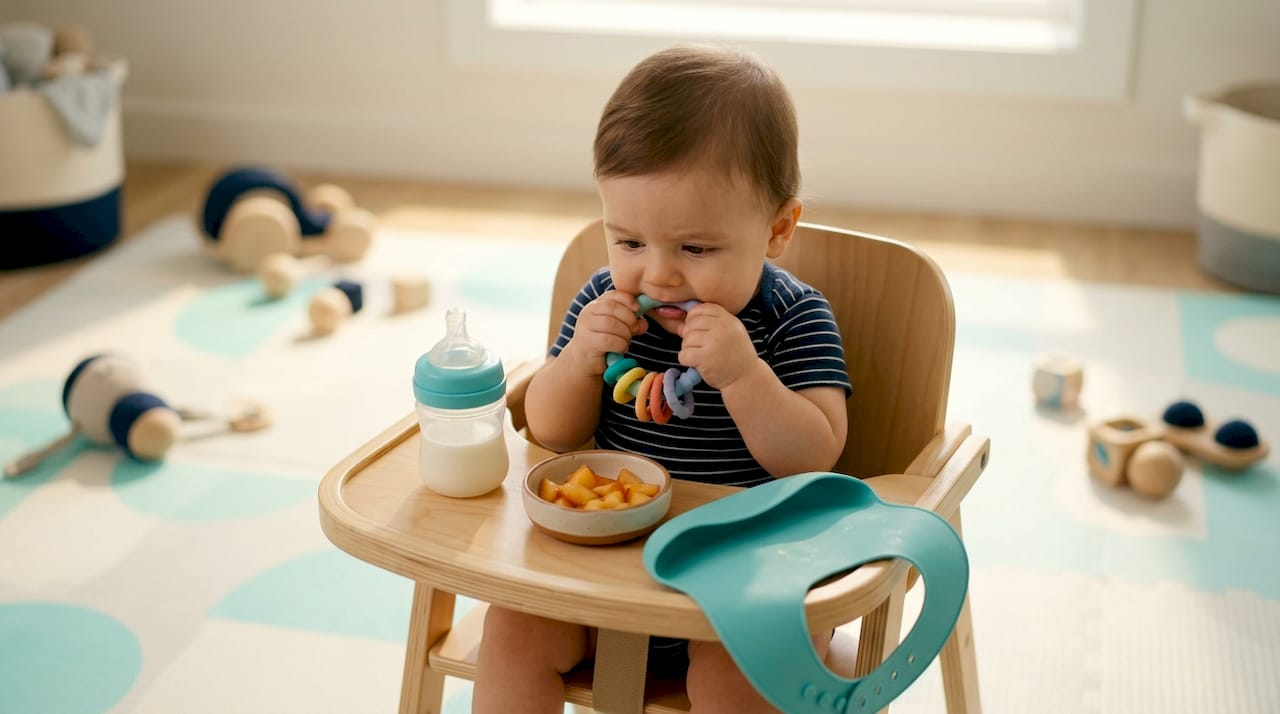
When a baby chews or bites down on a firm object, it applies counter-pressure on sore gums, which offsets the pressure caused by an emerging tooth pushing upward through the tissue. Think of it like pressing on a bruise to reduce the throbbing sensation. The pressure interrupts the discomfort signal. Cold works differently. A chilled object numbs the area by reducing blood flow and slowing nerve activity in the gum tissue, giving temporary but real relief.
Here’s a quick look at the most common safe teething objects and what each one offers:
| Teething object | Primary benefit | Safety notes |
|---|---|---|
| Chilled washcloth | Cold numbing + texture for chewing | Chill in fridge, not freezer; supervise use |
| BPA-free silicone teether | Counter-pressure + easy to grip | Check for cracks regularly |
| Organic cotton teething toy | Soft chewing + drool absorption | Machine washable is a must |
| Clip-on teething tie | Stays accessible, absorbs drool, crinkle stimulation | Designed for supervised wear on outfits |
| Firm rubber teether | Strong counter-pressure | Avoid hard plastic that could chip |
Notice that variety matters. Some babies prefer firm pressure, others prefer softer textures. Offering a few different options helps your baby find what works best for him.
Pro Tip: Always chill teething objects in the refrigerator, not the freezer. Frozen items can be too hard and too cold, potentially damaging delicate gum tissue. A cool, not icy, surface is all you need for effective relief.
The teething tie toy from TastyTie is a great example of a thoughtfully designed comfort object. It clips directly onto your baby’s outfit, so it’s always within reach without ever hitting the floor. The organic cotton fabric absorbs drool, the crinkle sound provides sensory engagement, and the soft texture is gentle on tender gums. For a baby learning to self-soothe, having a teether that is always right there is a genuine game-changer.
Promoting healthy self-soothing: What works and what to avoid
Knowing what helps is only half the picture. Knowing what to avoid is just as important, especially when the internet is full of well-meaning but risky advice.
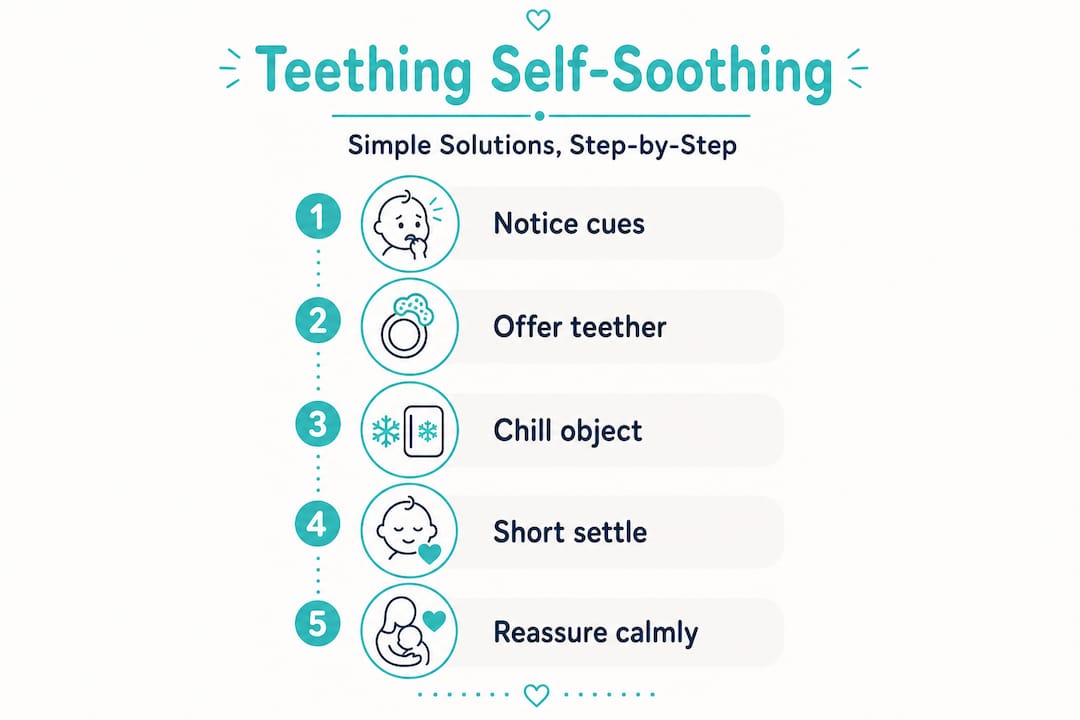
Here is a practical, step-by-step approach to nurturing self-soothing teething habits:
- Choose safe, age-appropriate teething objects. Look for BPA-free materials, organic cotton, or food-grade silicone. Avoid small parts, loose pieces, or anything that could break off.
- Make the teether accessible. Clip-on teethers or toys attached to the outfit mean your baby can reach for comfort independently, even during tummy time or in the stroller.
- Respond calmly and briefly. When your baby fusses, give him a moment to reach for his teether before you step in. If he’s genuinely distressed, offer gentle gum massage with a clean finger.
- Maintain your regular routine. Consistent nap times, feeding schedules, and bedtime routines help your baby feel secure, which makes it easier for him to self-calm during mild discomfort.
- Monitor symptoms closely. Mild drooling, gum swelling, and fussiness are normal. Anything beyond that warrants a call to your pediatrician.
What to avoid is equally important. Topical numbing gels containing benzocaine or lidocaine are not recommended for teething babies due to serious safety concerns and limited benefit. These products can cause a rare but dangerous condition called methemoglobinemia, which reduces the blood’s ability to carry oxygen. The risk is simply not worth it when safer, effective options exist.
Also avoid amber teething necklaces. Despite their popularity, they pose a real strangulation and choking hazard. No credible pediatric organization endorses them.
Key safety fact: Teething does not cause a true high fever. If your baby’s temperature rises above 100.4°F (38°C), look for another cause and contact your pediatrician.
Pro Tip: Consistency is your most powerful tool. Babies thrive on predictability. When you respond to teething fussiness the same calm way each time, your baby learns what to expect and settles faster. Calm parents genuinely help create calm babies.
For more evidence-based guidance, our expert teething tips blog covers a wide range of practical strategies for every stage of teething.
Teething, sleep, and self-soothing: Myths vs reality
Sleep is where teething anxiety tends to peak. Parents often assume every night waking during this phase is teething-related, and that assumption can lead to unnecessary interventions. Let’s look at what the research actually says.
The truth is more nuanced than most parenting forums suggest. Objective sleep measurements have not consistently shown a difference between teething and non-teething nights, even though many parents report more disruption during teething periods. This matters because it means some of the sleep struggles you’re experiencing may be developmental, not teething-related at all.
Here’s a side-by-side look at common perceptions versus what research actually shows:
| Common perception | What research shows |
|---|---|
| Teething causes major sleep disruption every night | No consistent difference in objective sleep measurements |
| Fever is a normal teething symptom | True fever above 100.4°F is not caused by teething |
| Babies can’t self-soothe during teething | Babies can and do use chewing and sucking to self-calm |
| Numbing gels are a safe quick fix | Not recommended due to safety risks |
| Every night waking needs intervention | Brief, calm response often enough; not every waking requires action |
Some common myths worth addressing directly:
- Myth: Teething always causes high fever. Reality: True fever is not a teething symptom, and parents should seek medical advice if their baby’s temperature climbs above 100.4°F.
- Myth: You have to intervene every time your baby wakes. Reality: Giving your baby a brief moment to resettle, especially if he has a teether nearby, supports the development of independent self-soothing.
- Myth: Teething pain is so severe that babies need medication. Reality: For most babies, mild discomfort responds well to chewing, cold objects, and gentle gum massage.
- Myth: Sleep training and teething cannot coexist. Reality: Consistent, gentle routines support both sleep and self-soothing during teething.
“Teething itself should not cause true high fever or systemic illness; if symptoms are beyond mild localized discomfort, investigate other causes.” Cleveland Clinic
When should you seek help? If your baby has a fever above 100.4°F, persistent diarrhea, significant rash, or seems genuinely unwell beyond typical fussiness, call your pediatrician. Teething is uncomfortable, but it should not make your baby sick. Trust your instincts. You know your baby best, and mild discomfort is very different from real illness.
Connecting your baby with teething solutions that are always accessible, safe, and designed for independent use gives him the best possible chance to self-soothe effectively, day and night.
Why self-soothing teething guidance is often misunderstood
Here’s a perspective most teething guides miss entirely.
The majority of teething advice falls into one of two camps. Either it catastrophizes the experience, suggesting you’ll need a full toolkit of remedies and months of disrupted sleep, or it oversimplifies it, telling you to just “give them a teether and they’ll be fine.” Neither extreme is particularly helpful.
What the evidence actually supports is something quieter and more nuanced. Self-soothing works best when it is enabled, not forced. That means setting up safe, supervised mouth-comfort options and using brief, gentle soothing like gum massage or light pressure while allowing your baby to settle using his own chewing and sucking behaviors. It’s a partnership, not a hands-off approach.
In my opinion, the “training” framing does a lot of damage. Parents hear “self-soothing” and assume they’re supposed to back off completely, which feels wrong and often is wrong for a baby in real discomfort. The better framing is “supported independence.” You are building a scaffold, not removing yourself from the picture.
The other piece most guides skip is the role of the teething object itself. A teether that your baby can access independently, without it falling to the floor or requiring your help to retrieve, is doing more than just relieving gum pain. It is teaching your baby that he has agency over his own comfort. That is a profound early lesson. A clip-on safe self-soothing aid like TastyTie’s teething tie embodies this principle beautifully. It stays put, it’s always there, and your baby can reach for it entirely on his own.
Consistency and calm responsiveness will always outperform gadgets and miracle cures. The parents who navigate teething most smoothly are not the ones with the most products. They’re the ones who respond predictably, stay calm, and trust their baby’s natural ability to find comfort.
Explore safe teething solutions for your baby boy
Ready to put these self-soothing strategies into action? TastyTie makes it easy.

The Tasty Tie® teething tie is the only teething toy on the market that clips directly to your baby’s outfit, absorbs drool with organic cotton, entertains with a satisfying crinkle sound, and is fully machine washable. It’s patented, award-winning, and rated 4.7 stars across more than 450 Amazon reviews. Over 35,000 families have made it part of their teething routine. If you’re looking for a complete starter set, the bodysuit & teether bundle pairs the teething tie with a soft bodysuit for a practical, adorable gift or everyday essential. Browse our full collection and find the right fit for your baby boy’s teething journey.
Frequently asked questions
Can teething cause high fever in babies?
No, true fever is not caused by teething. If your baby’s temperature rises above 100.4°F (38°C), look for another cause and consult your pediatrician.
What are safe objects for babies to chew on during teething?
Safe options include BPA-free silicone teethers, chilled (not frozen) washcloths, and organic cotton teething toys. Letting the baby chew on safe objects and offering light gum massage are both effective and pediatrician-recommended approaches.
Are numbing teething gels safe for babies?
No. Topical numbing gels containing benzocaine or lidocaine are not recommended for teething babies due to serious safety risks and minimal proven benefit.
Does teething always disrupt a baby’s sleep?
Not always. Objective sleep measurements have not consistently shown a difference between teething and non-teething nights, meaning some perceived sleep disruption may be developmental rather than teething-related.

