


Why teethers fall on the floor and how to fix it
TL;DR:
- Babies naturally explore with their mouths, causing teethers to fall frequently during development.
- Most reputable teethers are designed and tested to withstand drops safely, emphasizing durability and safety standards.
Picture this: you’ve just handed your baby boy his favorite teether, and within thirty seconds it’s on the floor. Again. You pick it up, clean it off, hand it back, and the whole cycle repeats before you’ve even finished your coffee. If this sounds like your morning, you’re not alone, and nothing is wrong with your baby or his teether. Babies naturally grab, wiggle, and mouth objects while exploring the world, and that constant movement is exactly what sends teethers flying. This guide breaks down the real reasons teethers fall, what safety standards actually say about it, and the practical strategies that make the whole teething phase a lot less messy.
Table of Contents
- Why teethers always hit the floor: Breaking down the causes
- Safety first: What drop tests and standards really mean
- The real concern: Hygiene and cleaning dropped teethers
- Practical solutions: How to outsmart the falling teether
- The truth most guides miss: Embrace the chaos and parent smarter
- Discover teething ties that stay close and stylish
- Frequently asked questions
Key Takeaways
| Point | Details |
|---|---|
| Teether drops are normal | Falling teethers are a natural part of teething and not a sign of product failure. |
| Safety is built in | Drop tests and safety standards ensure good teethers stay safe after falls. |
| Hygiene is your focus | Cleaning teethers after drops prevents germs and keeps your baby safe. |
| Smart designs help | Clip-on and easy-grip teethers reduce hassle and keep teethers close to your baby. |
| Mindset matters most | Accepting drops and preparing with extras and cleaning routines means less stress for parents. |
Why teethers always hit the floor: Breaking down the causes
Now that we’ve seen falling teethers are completely normal, let’s unpack exactly why it happens, physically and behaviorally.
Babies between 3 and 12 months are in a full-on sensory exploration phase. Everything goes into the mouth, gets shaken, banged, and flung. That’s not misbehavior; it’s development. When your baby chews on a teether, he’s simultaneously squeezing it, turning his head, kicking his legs, and probably trying to grab something else entirely. That combination of movement almost always breaks his grip eventually.
Here’s what’s actually working against you:
- Developing motor skills: Babies this age don’t yet have the fine motor control to hold an object steadily while also chewing on it. The grip is inconsistent by nature.
- Drool overload: Teething dramatically increases saliva production, which coats both the baby’s hands and the teether itself. A wet, slippery teether is almost impossible for small hands to hold onto.
- Gravity and mouth position: When a baby holds a teether in his mouth without using his hands, there’s nothing stopping it from falling the moment his jaw relaxes.
- Short attention spans: Babies shift focus constantly. The moment something else catches his eye, the teether is forgotten and dropped.
As drool and oral movements increase during teething, the friction that normally keeps objects in place simply disappears. It’s the same reason pacifiers fall out so often during this stage. You can practice self-soothing teething tips to help your baby stay calmer and more focused, which can reduce some of the frantic movement that leads to drops.
“Babies are wired to explore with their mouths. The drop isn’t a failure. It’s a feature of normal development.”
The key takeaway here is that no teether design will completely eliminate falls. Understanding that takes a huge amount of pressure off parents who feel like they’re doing something wrong.
Safety first: What drop tests and standards really mean
Understanding why drops happen can ease frustration, but what about safety? Dropping isn’t just normal, it’s planned for in product design.
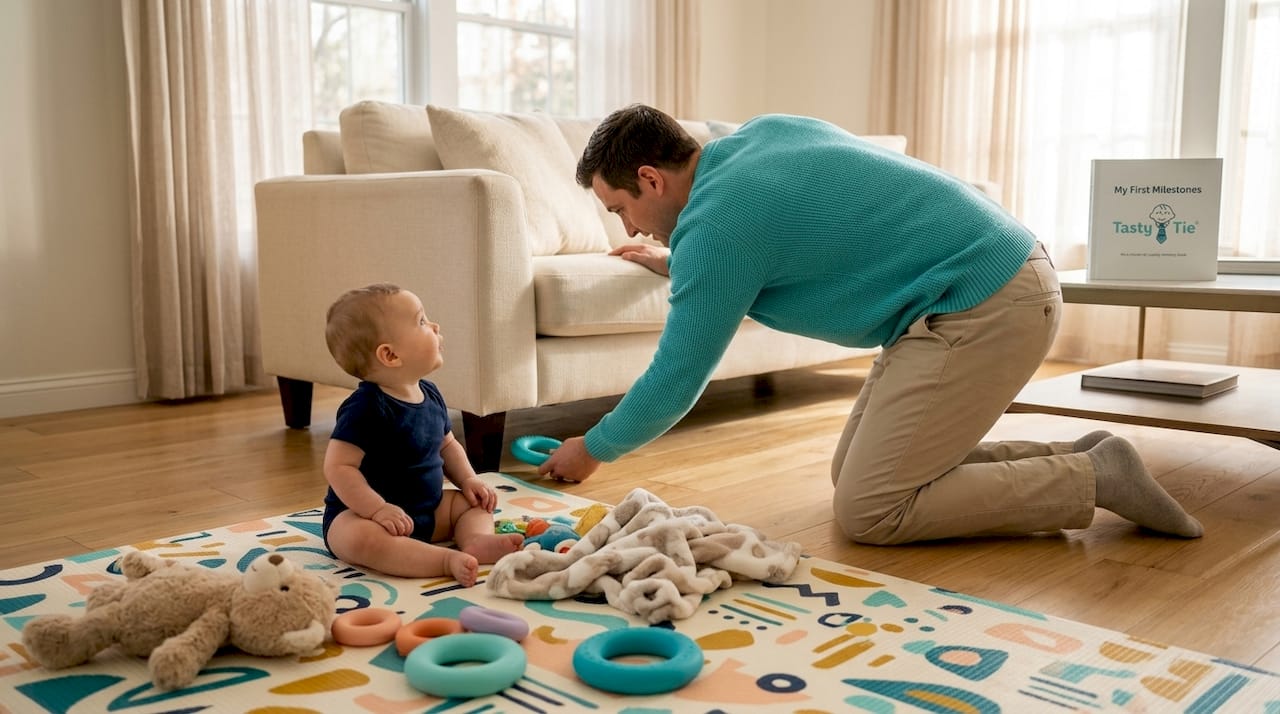
Most parents assume that a teether falling on the floor is a safety problem. The reality is more reassuring. Reputable teethers are designed and tested with the expectation that they will be dropped, thrown, and handled roughly. Toy safety evaluations explicitly include drop-test procedures to ensure products remain safe after foreseeable mishandling. That means sharp edges, broken parts, and structural failures are all evaluated before a product ever reaches store shelves.
Here’s a quick look at what drop testing actually checks for:
| Safety check | What evaluators look for |
|---|---|
| Structural integrity | Does the teether crack, split, or break apart? |
| Sharp edges | Are any new edges exposed after impact? |
| Small parts | Do any pieces detach that could become a choking hazard? |
| Material safety | Do surfaces remain non-toxic after impact? |
| Liquid integrity | For gel-filled teethers, does the seal hold after a drop? |
Pro Tip: When shopping for teethers, look for products that clearly state they meet ASTM F963 or equivalent safety standards. That certification tells you the product has gone through rigorous drop and durability testing.
The goal of drop testing is not to find teethers that never fall. It’s to make sure that when they do fall, which they always will, nothing dangerous happens. Choosing teethers from reputable brands and learning about using teether clips safely adds another layer of protection for your little one.
“A teether that passes drop testing isn’t designed to stay in your baby’s hands. It’s designed to stay safe when it doesn’t.”
The real concern: Hygiene and cleaning dropped teethers
With safety standards addressed, germs become the main worry when a teether lands on the ground. Here’s what really matters and how to handle it.
Dropped teethers pick up germs from whatever surface they land on, whether that’s a restaurant floor, a park bench, or your own kitchen tiles. Dust, pet hair, bacteria, and other contaminants transfer quickly to a moist, chewed-on surface. Since your baby is putting that teether straight back into his mouth, hygiene becomes your most important daily habit.
Here’s a simple cleaning routine that works well for most teethers:
- Rinse immediately after a fall using clean running water to remove visible debris.
- Wash with warm, soapy water using a baby-safe dish soap. Scrub all surfaces, including any textured ridges where bacteria can hide.
- Rinse thoroughly to remove all soap residue, which can irritate a baby’s mouth.
- Air dry completely before returning the teether to your baby. Moisture trapped inside textured designs can encourage mold growth.
- Inspect for damage every single time you clean. Look for cracks, tears, or soft spots, especially on liquid-filled or gel-filled designs.
- Deep clean daily even if the teether hasn’t been dropped, since saliva alone introduces bacteria over time.
Pro Tip: Keep a small zip-lock bag in your diaper bag specifically for dropped teethers. Instead of scrambling to clean on the spot, seal the dirty teether away and pull out a clean backup. It’s one of the simplest systems that saves a lot of stress on outings.
You can find more practical guidance on the teething hygiene tips section of our blog, including advice on which cleaning methods work best for different teether materials like organic cotton, food-grade silicone, and rubber.
Practical solutions: How to outsmart the falling teether
Knowing what you can’t fully control lets you focus on what you can. These smart solutions make life with a teething baby easier and cleaner.
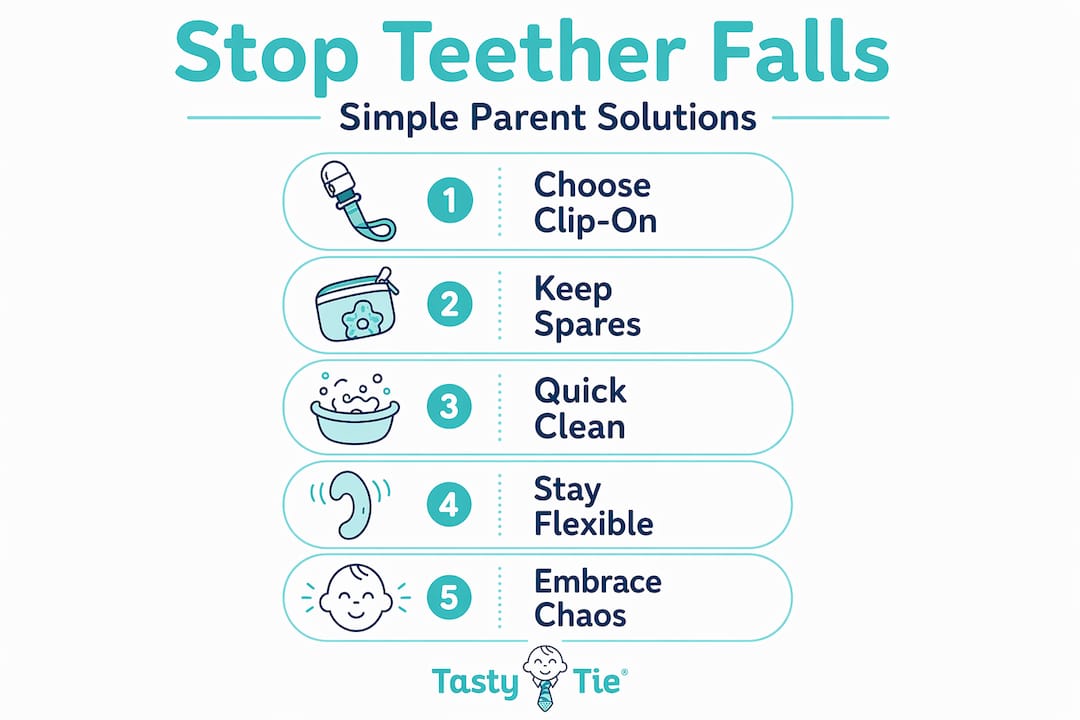
The most effective approach combines smart product choices with realistic expectations. Here’s how different teether styles compare when it comes to managing drops:
| Teether type | Drop risk | Ease of cleaning | Best for |
|---|---|---|---|
| Standard silicone ring | High | Easy | Home use |
| Liquid-filled teether | High | Moderate | Short supervised sessions |
| Clip-on fabric teether | Low | Easy (machine washable) | On-the-go, everyday use |
| Wearable teething tie | Very low | Easy (machine washable) | Daily wear, outings |
| Rubber teether | High | Easy | Home use |
The standout solution for parents who are tired of the drop-and-retrieve cycle is a clip-on teething tie that attaches directly to your baby’s outfit. When the teether slips from his mouth or hands, it stays close to his body instead of hitting the floor.
Beyond design choices, here are a few more strategies that genuinely help:
- Always carry a backup. One clean teether in a sealed bag means a dropped teether never has to derail your outing.
- Choose easy-grip textures. Teethers with ridges, loops, or soft fabric sections give babies more surface area to grab onto, which reduces drops in the first place.
- Avoid liquid-filled designs for outings. These are harder to clean quickly and carry a higher risk of damage if dropped on hard surfaces.
- Rotate teethers regularly. Fresh teethers hold a baby’s attention longer, which means less frantic movement and fewer drops.
The truth most guides miss: Embrace the chaos and parent smarter
Here’s an honest take that most teething guides skip entirely. The entire “stop the drop” mindset sets parents up for frustration from the start.
We’ve seen countless product claims promising teethers that “stay put” or “won’t fall.” In practice, no teether will stay in a wiggly baby’s hands indefinitely, and chasing that goal leads to wasted money and unnecessary stress. The smarter shift is from prevention to preparation. You prepare by choosing designs that minimize the problem, like the award-winning teething tie that clips to your baby’s outfit. You prepare by having a clean backup ready. You prepare by building a quick cleaning habit into your daily routine.
The parents who feel least stressed about teething are not the ones who found the perfect teether. They’re the ones who stopped expecting perfection and built a simple system instead. A dropped teether is not a parenting failure. It’s Tuesday.
In my opinion, the most underrated quality in a teether is not the material or the shape. It’s how easy it is to manage when things go sideways, because they always do. Products that attach to clothing, absorb drool, and wash in the machine are not just convenient. They’re genuinely smarter designs built around how babies actually behave.
Discover teething ties that stay close and stylish
Ready to make teething less stressful and keep teethers close? The TastyTie teething tie toy is the only teether on the market that clips to your baby boy’s outfit, absorbs drool, crinkles for entertainment, and is made from organic cotton. It’s machine washable, BPA free, and designed specifically for boys aged 3 to 12 months. With over 35,000 units sold and a 4.7-star rating on Amazon, it’s a parent-approved solution that actually fits real life. For a complete starter set, the teether bundle pairs the teething tie with a matching bodysuit, making it a thoughtful and practical gift that covers both style and function.
Frequently asked questions
Are falling teethers a safety risk?
No, dropped teethers are not inherently unsafe as long as you clean and inspect them for damage after each fall, since hygiene is the primary concern when teethers hit the floor.
What’s the best way to clean a teether after it falls?
Rinse it immediately with clean water, then wash with warm soapy water using a baby-safe soap, and allow it to air dry fully before giving it back to your baby.
Do clip-on teethers prevent falls?
Clip-on teethers significantly reduce how far a teether travels when dropped, keeping it close to your baby’s body and cleaner than a teether that hits the floor.
What should I do if a teether is damaged after falling?
Replace it immediately. Liquid-filled teethers that tear or leak can expose sharp edges and contaminated liquid, making them unsafe for continued use.

