


Multi-Sensory Teething Toy Developmental Benefits Explained
TL;DR:
- Multi-sensory teething toys stimulate infants’ tactile, auditory, and visual senses, supporting development beyond gum relief.
- Choosing safe, age-appropriate toys with variety, ease of cleaning, and safety certifications fosters healthy exploration while reducing hazards.
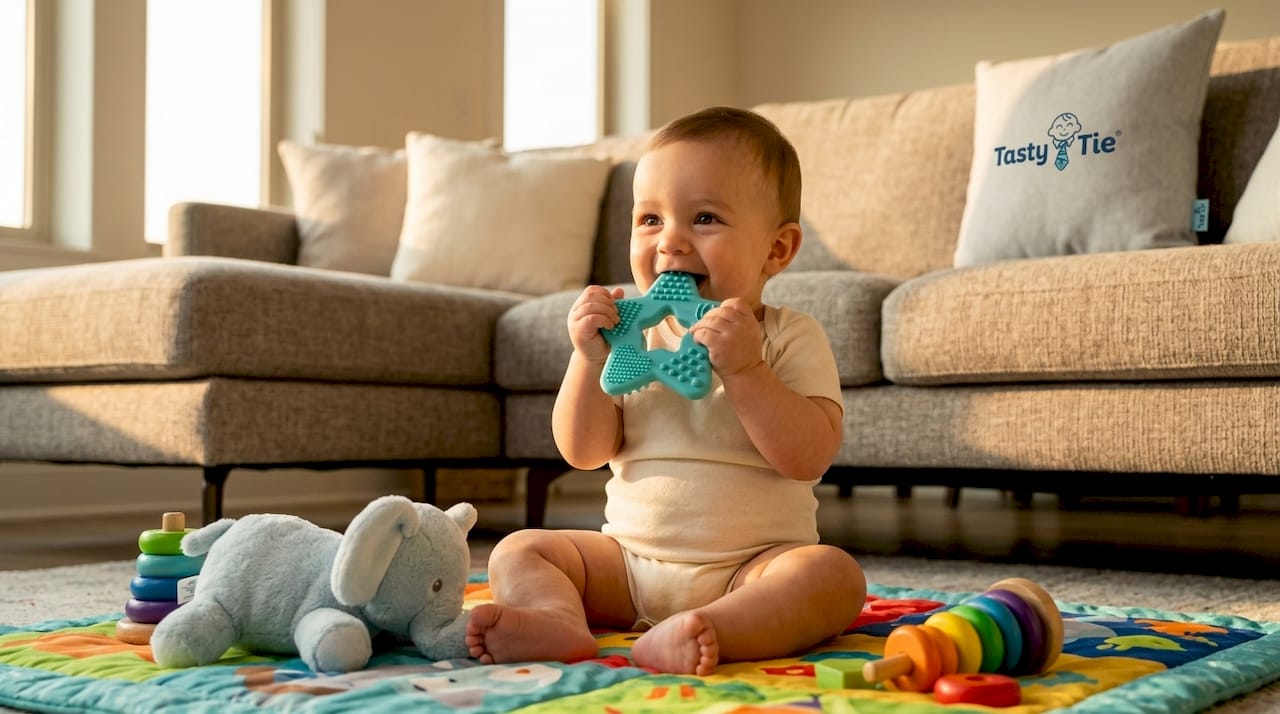
Multi-sensory teething toys are defined as infant chew toys that combine two or more forms of sensory input, typically texture, sound, and color, to soothe gum discomfort while encouraging sensorimotor exploration. The multi-sensory teething toy developmental benefits go well beyond simple pain relief. These toys engage a baby’s tactile, auditory, and visual systems simultaneously, giving the 3 to 12 month window, one of the most neurologically active periods in early life, a structured outlet for safe exploration. Cleveland Clinic confirms that safe chewing helps relieve gum pressure without disrupting a baby’s routine, making these toys a practical first tool for sensory play.
How do multi-sensory teething toys support infant development?
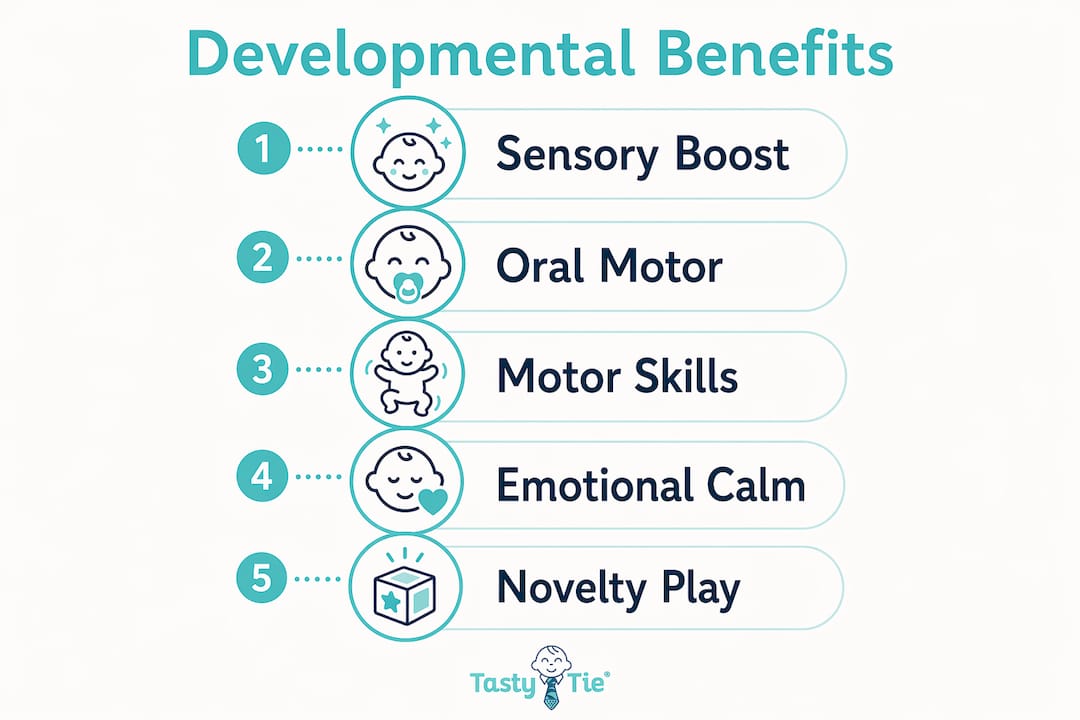
Multi-sensory teething toys support infant development by stimulating four overlapping skill areas at once: sensory processing, oral motor control, fine motor coordination, and emotional regulation. That combination is what separates them from a plain rubber ring.
Here is what each feature actually does for your baby:
- Varied textures activate the tactile receptors in a baby’s mouth and hands, building the sensory map the brain uses to interpret touch throughout life. Features like textured buttons and cords stimulate cognitive and sensorimotor awareness in ways a smooth surface simply cannot.
- Crinkle sounds and rattles train auditory attention and cause-and-effect understanding. When a baby squeezes a toy and hears a sound, they are learning that their actions produce results. That is a foundational cognitive skill.
- Bright, contrasting colors support early visual tracking and focus, which feeds directly into hand-eye coordination as babies learn to reach and grasp.
- Chewing and mouthing build jaw muscle strength and oral motor control. Jaw muscle development through safe chewing also supports feeding readiness and early speech muscle patterns.
- Grasping and manipulating the toy builds grip strength and finger dexterity, the same fine motor skills that will later support self-feeding and writing.
The emotional benefit is just as real. Repetitive mouthing and tactile input have a calming effect on the nervous system. A baby who can self-soothe with a teether is practicing a form of self-regulation that reduces fussiness and supports longer, calmer wake windows.
Pro Tip: Rotate two or three different teethers throughout the week rather than offering the same one daily. Novelty sustains attention and gives your baby’s sensory system fresh input without overstimulation.
What should you look for in a safe, effective teether?
Not every teether on the market delivers genuine developmental value or meets basic safety standards. The table below outlines the features that matter most when you are choosing a sensory exploration toy for an infant aged 3 to 12 months.
| Feature | What to look for | What to avoid |
|---|---|---|
| Material | BPA-free, food-grade silicone or organic cotton | PVC, latex, or unlabeled plastics |
| Size | Large enough to prevent full insertion into mouth | Anything smaller than a toilet paper roll diameter |
| Detachable parts | One-piece or firmly attached components | Beads, buttons, or strings that can separate |
| Strings or cords | None, or very short and firmly attached | Long silicone strings (choking hazard, see below) |
| Texture variety | Multiple surfaces: ridged, smooth, soft, firm | Single-texture designs with no sensory variation |
| Cleanability | Machine washable or dishwasher safe | Fabric that cannot be fully sanitized |
| Certifications | ASTM F963, EN71, or equivalent safety tested | No safety markings or country of origin listed |
The string hazard deserves specific attention. A silicone pull-string teether was recalled after 102,000 units sold because strings long enough to reach the back of the throat caused 11 documented choking incidents. That recall is a reminder that even soft, non-toxic materials become dangerous when the design is flawed. Always check the U.S. Consumer Product Safety Commission (CPSC) recall database before purchasing any teether.
Pro Tip: Before buying, run the toy through the “toilet paper roll test.” If any part of the toy fits entirely inside a standard toilet paper roll, it is too small for an infant under 12 months.
How to introduce a multi-sensory teether safely
Introducing a new teether works best when you follow your baby’s lead rather than pushing engagement. Sensory oral motor therapy research from Seabird Speech Therapy confirms that motor learning improves with autonomy and repetition, meaning a baby who chooses to mouth a toy learns more from it than one who has it pressed into their mouth.
Follow these steps for a safe, effective introduction:
- Wash the toy before first use. Use a baby-safe cleanser and allow it to dry completely. Bacterial buildup on teethers can cause infections and oral irritation in infants.
- Offer the toy during a calm, alert wake window. Avoid introducing it when your baby is already overtired or overstimulated.
- Place it within reach rather than directly in the mouth. Let your baby grasp it, examine it visually, and bring it to their mouth on their own terms.
- Stay present during all mouthing sessions. Supervised exploration is non-negotiable for infants under 12 months.
- Rotate toys every few days. Offering a different texture or sound keeps sensory input fresh and sustains developmental engagement.
- Avoid forcing play. If your baby pushes the toy away or shows disinterest, respect that signal. Child-led interaction is the foundation of effective developmental play for infants.
- Inspect the toy before every use. Check for cracks, tears, or loose parts. Replace any teether that shows signs of wear, because a compromised toy can break apart during mouthing.
What safety concerns should parents watch for?
The most common risks with sensory teethers fall into three categories: choking hazards, hygiene failures, and overstimulation. Knowing the signs of each helps you respond quickly.
- Choking hazards: Avoid teethers with small detachable parts or long strings. Even soft silicone can become a hazard if it tears under biting stress. If a piece breaks off during mouthing, remove the toy immediately.
- Hygiene failures: Teethers that cannot be fully cleaned harbor bacteria. Wash teethers after every use session, especially if they have been dropped. Air dry completely before returning them to your baby.
- Overstimulation: A baby who turns away, arches their back, or becomes fussy during teether play may be signaling sensory overload. Reduce the number of active sensory features by offering a simpler toy and returning to the multi-sensory option after a rest period.
- When to call your pediatrician: If your baby develops a rash around the mouth, refuses to eat, or shows signs of oral pain beyond typical teething discomfort, consult your pediatrician. A pediatric occupational therapist or speech-language pathologist can also assess whether sensory oral motor support is needed.
Cleveland Clinic advises that the primary goal of any teething aid should be comfort and safe mouthing, not milestone acceleration. Keep that framing front and center when choosing and using these toys.
What I’ve learned about sensory teethers and realistic expectations
Here is my honest perspective after years of working with parents navigating the teething stage: the developmental benefits of sensory teethers are real, but they are also modest. These toys support exploration. They do not accelerate milestones on a fixed timeline.
The parents I see get the most out of these toys are the ones who treat them as comfort tools first and developmental tools second. They offer the teether when their baby is curious and calm, not as a solution to every fussy moment. That distinction matters because a baby who mouths a toy voluntarily is engaging their sensory system actively. A baby who is handed a toy to stop crying is just distracted.
I also think the industry undersells the emotional regulation piece. A baby who learns to self-soothe with a safe teether is building a skill that pays off well beyond the teething window. That quiet moment of independent exploration, where your baby holds, mouths, and examines a toy without needing you to direct it, is worth more than any single developmental checkbox.
Combine sensory teethers with warm, attentive caregiving and you have a genuinely supportive environment. The toy is one part of that picture, not the whole frame.
— Tasty
Meet the Tastytie teething tie: sensory play that clips on
If you are looking for a teether that covers the sensory bases without the safety trade-offs, the Tastytie teething tie is worth a close look. It is the only teether on the market that clips directly to your baby’s outfit, so it never hits the floor. It is made from organic cotton, absorbs drool, and features a built-in crinkle sound that delivers auditory stimulation every time your baby squeezes it. It is machine washable, BPA-free, and designed specifically for baby boys aged 3 to 12 months. With over 35,000 units sold and a 4.7-star rating across more than 450 Amazon reviews, it is a trusted pick for parents who want teething relief options that are practical, safe, and genuinely fun for babies to explore.
FAQ
What are the main developmental benefits of multi-sensory teething toys?
Multi-sensory teething toys support sensory processing, oral motor development, fine motor coordination, and emotional self-regulation by combining textures, sounds, and colors in a single safe object for infants to explore.
Are multi-sensory teethers proven to accelerate developmental milestones?
No controlled clinical studies confirm that multi-sensory teethers accelerate specific milestones. Cleveland Clinic frames teething aids as comfort and mouthing support tools, not milestone accelerators.
What makes a teething toy safe for babies 3 to 12 months?
A safe teether is made from BPA-free, food-grade silicone or organic cotton, has no detachable small parts or long strings, passes ASTM F963 or equivalent safety testing, and can be fully cleaned after each use.
How often should I clean my baby’s teething toy?
Clean teethers after every mouthing session using a baby-safe cleanser and allow them to dry completely, since bacterial buildup on wet or soiled teethers can cause oral infections in infants.
When should I replace a multi-sensory teether?
Replace any teether that shows cracks, tears, discoloration, or loose components immediately, because damaged materials can break apart during mouthing and create a choking hazard.

