


Organic Cotton Teether Benefits: What Parents Need to Know
TL;DR:
- Organic cotton teethers are grown and processed without harmful chemicals, providing safer options for sensitive babies. They offer enhanced softness, breathability, and moisture absorption, supporting better gum comfort and skin tolerance. Proper certification, secure construction, and regular inspection are essential for ensuring teether safety and effectiveness.
The teething stage hits fast, and suddenly you’re scanning every product label wondering what’s actually safe for your baby to chew. Not all teethers are created equal, and the material your baby mouths for hours every day matters more than most parents initially realize. The organic cotton teether benefits that matter most aren’t just about being “natural” — they’re about verified chemical safety, genuine skin comfort, and smart design. This guide breaks down exactly what organic cotton offers, what certifications actually mean, and what red flags to watch for beyond the fabric itself.
What are organic cotton teether benefits, exactly?
Before getting into specifics, it helps to understand what “organic cotton” actually means in a regulated sense. Organic cotton is grown without synthetic pesticides or fertilizers, and it undergoes processing without harsh chemical finishing agents. That last part is often skipped in marketing materials, but it’s critical. Conventional cotton processing uses formaldehyde-based wrinkle resistance, optical brighteners, and other chemical treatments that can linger in the final fabric.
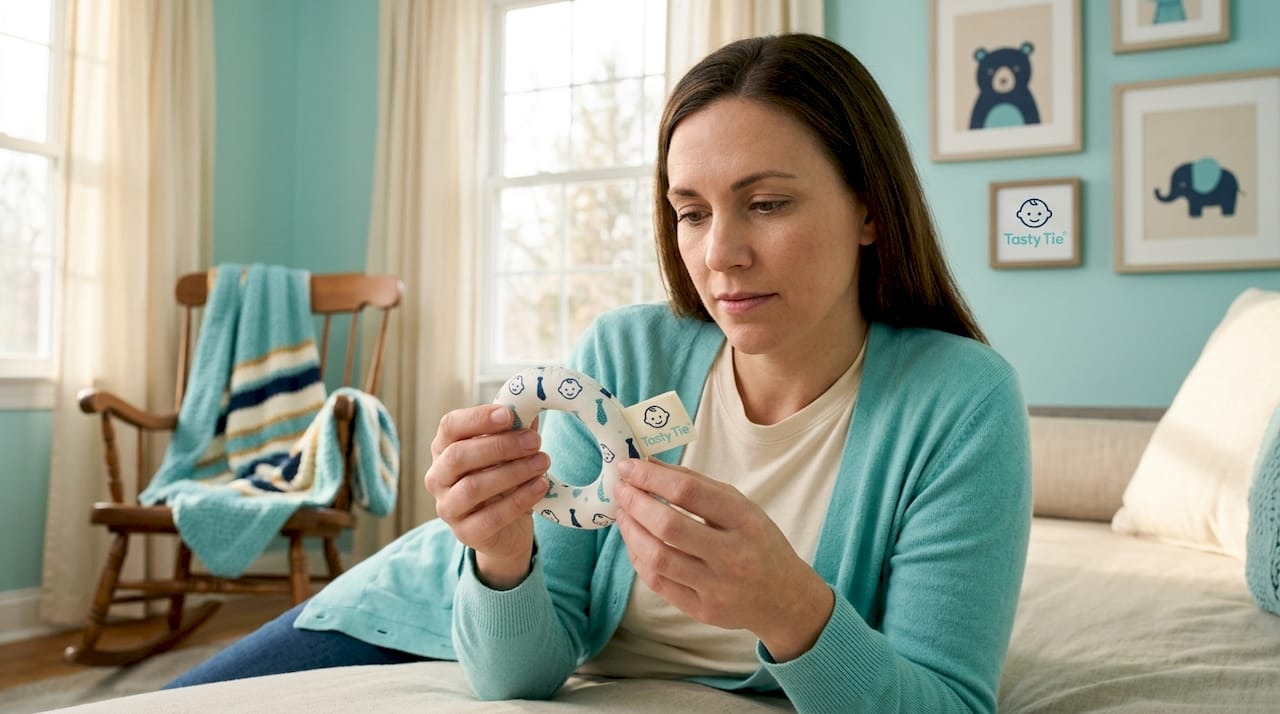
For baby teethers, this distinction is significant. A baby gnawing on a teether for 20 to 30 minutes at a stretch is getting direct oral contact with whatever is in that fabric.
Two certifications give real assurance here:
- GOTS (Global Organic Textile Standard): This covers the full supply chain, from fiber to finished product. It requires at least 70% certified organic fibers and prohibits toxic chemicals including PFAS, phthalates, and heavy metals. Annual third-party audits are required to maintain the certification.
- OEKO-TEX Standard 100 (Class I): Tests the finished textile for harmful substances at levels safe for babies and toddlers. Even products made with conventional cotton can earn this label if they test clean. When you see both GOTS and OEKO-TEX on a teether, that’s the strongest combination available.
Pro Tip: Don’t rely on the words “natural” or “non-toxic” on product packaging. These terms have no regulated definition for baby products. Look for the actual certification name and logo.
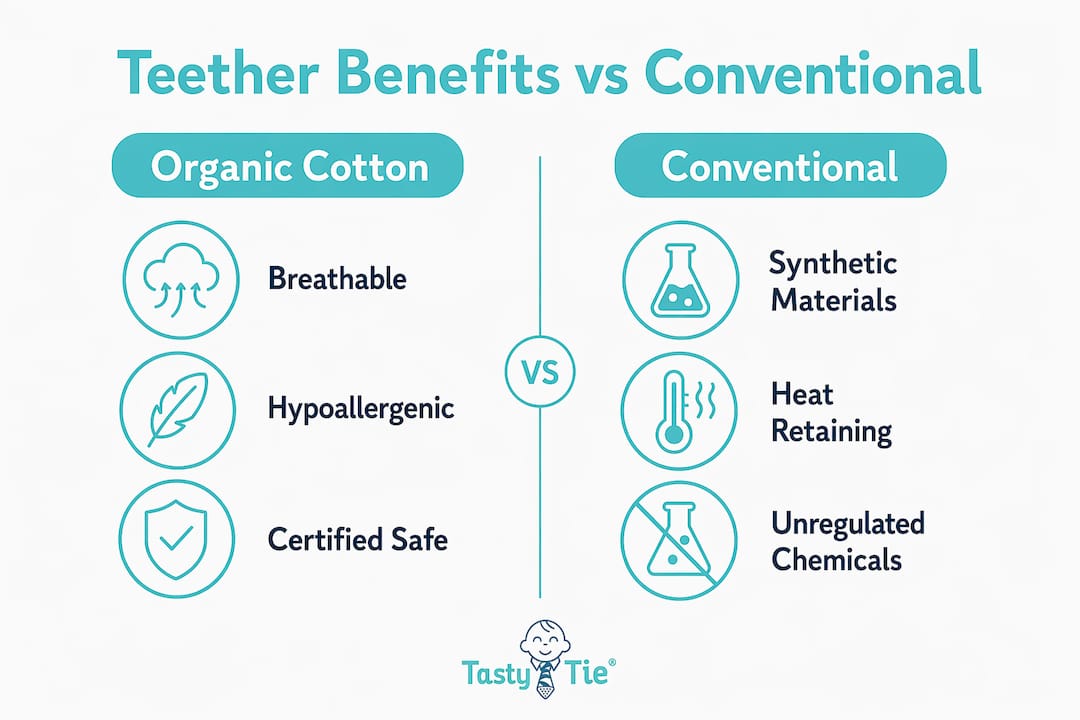
The difference between certified organic and conventional in cotton processing and safety is significant enough that parents of babies with sensitive skin consistently report better outcomes with verified organic textiles.
Health and sensory benefits worth knowing
The soft, breathable texture of organic cotton is probably the most obvious benefit of organic teething toys, but what makes it genuinely useful goes a bit deeper than softness alone.
Here’s how the comfort advantages stack up for your baby:
-
Gentler on tender gums. Organic cotton fibers are naturally softer because they aren’t stripped and roughened by harsh chemical processing. When a teething baby applies pressure to sore gums, a softer, more pliable surface distributes that pressure more comfortably than rigid plastics or densely woven synthetics.
-
Better tolerance for sensitive and eczema-prone skin. Parents of eczema-prone babies consistently report reduced flare-ups and better tolerance with organic cotton fabrics compared to conventionally processed textiles. The absence of chemical residues is the likely factor.
-
Sensory stimulation that supports development. Organic cotton teethers aren’t just passive soothers. The varied textures support oral motor skill development and give babies a safe way to explore sensation. Varied texture and softness enable babies to self-soothe more effectively while also building the oral awareness they’ll need for eating and speech development later on.
-
Better drool absorption. Unlike silicone or plastic, cotton absorbs moisture. For heavy droolers, this means less chin rash and less discomfort from wet fabric rubbing against skin.
“Softness, breathability, and skin tolerance are the main comfort factors parents seek in organic cotton teethers, especially for babies prone to eczema or sensitive skin.” — Tutti Frutti Clothing
The comparison to synthetic materials is straightforward. Polyester and certain plastics don’t breathe, can trap heat and moisture, and offer none of the natural fiber benefits described above. You can read more about why organic beats polyester for babies in detail if you want the full breakdown.
Safety considerations beyond the fabric
Here’s where a lot of parents get surprised. The material choice matters, but it doesn’t tell the whole safety story. Some of the most serious teether hazards have nothing to do with what the teether is made of.
| Safety factor | What to look for | What to avoid |
|---|---|---|
| Detachable parts | Firmly attached components with no wiggle | Any part that pulls, twists, or loosens |
| Seam integrity | Tight, reinforced stitching throughout | Visible loose threads or fraying edges |
| Toy safety certification | EN71 Parts 1-3 compliance | Products with only vague “safe” claims |
| Chemical certification | GOTS or OEKO-TEX Class I label | “Natural” or “non-toxic” without certification |
| Size appropriateness | Age-appropriate sizing per label | Teethers too small for the stated age |
A 2026 recall of silicone teethers sold at major retailers illustrated the point clearly. The recalled product had small parts that could separate from the main body, creating a choking hazard. The material was not the problem. The assembly was.
Secure seams and fabric integrity are especially critical in the bite zone, where baby pressure and repeated chewing stress the construction most. Organic cotton is only as safe as the craftsmanship holding it together.
Some organic cotton teethers also carry EN71 Parts 1-3 certification, which covers mechanical, flammability, and toxic hazards. This is the standard worth looking for as it covers the full range of toy safety concerns, not just chemical content.
Pro Tip: Before purchasing, physically inspect the teether at the seams. Tug gently on any decorative element. If anything shifts or loosens, skip that product regardless of what certifications it claims.
How to choose and use organic cotton teethers wisely
With so many options labeled as eco-friendly or natural, a practical checklist makes the decision much simpler.
- Verify the certification, not just the claim. Look for the actual GOTS or OEKO-TEX logo on the packaging, not just the words. Specific certification labels provide real assurance; vague claims do not.
- Inspect stitching before and after each wash. The bite zone takes the most stress. Check it regularly for signs of fraying or loosening.
- Machine wash on a gentle cycle. Most quality organic cotton teethers are machine washable. Hot water can degrade stitching over time, so cool or warm water with a baby-safe detergent keeps the teether hygienic without compromising structure.
- Rotate teethers. Giving a single teether continuous use accelerates wear. Rotating two or three options extends the life of each and keeps your baby engaged with different textures.
- Match the teether to your routine. A teether that clips to clothing works differently than one that sits in a bag or sits on a play mat. Think about where and when your baby teethes most, then choose a design that fits that context.
Pro Tip: If your baby is a heavy drooler, choose organic cotton teethers that are explicitly labeled as machine washable. Daily washing is realistic with the right product, and hygiene matters as much as the material itself.
Introducing a teether during calm moments, rather than at peak fussiness, helps your baby associate it with comfort rather than desperation. A few minutes of exploratory chewing when they’re relaxed teaches them to reach for it independently when discomfort hits.
My honest take on organic cotton teethers
I’ve spent years watching parents navigate the noise around baby product safety, and the pattern I see repeatedly is this: marketing language moves faster than parent education. Products get labeled “natural,” “organic,” and “non-toxic” with no accountability behind those words.
In my experience, the parents who feel most confident are the ones who learned to look past the language and check the certification. GOTS and OEKO-TEX Class I aren’t perfect systems, but they’re audited and specific. That matters when your baby is chewing on something for hours a day.
What I find equally important, and what most articles on this topic skip, is the manufacturing quality conversation. I’ve seen beautifully certified organic cotton teethers with genuinely poor stitching. The fabric was clean. The construction was not. Both have to meet a high standard for the product to be genuinely safe.
My honest advice: organic cotton is worth prioritizing for a teether, but treat it as one part of the evaluation, not the whole answer. Check the certification, check the seams, and buy from brands that are transparent about their safety testing. The parents I’ve seen most relieved are the ones who did both.
— Tasty
A teether designed to check every box
If you’re looking for an organic cotton teether that combines certified materials with practical, parent-approved design, Tastytie was built with exactly that in mind. The TastyTie teething tie is made with organic cotton, clips directly to your baby boy’s outfit so it never hits the floor, absorbs drool, and makes a crinkle sound that keeps babies engaged and self-soothing. It’s machine washable, designed for babies 3 to 12 months, and rated 4.7 stars across more than 450 reviews. Parents love it for travel, daily wear, and as a genuinely useful gift. Check out the TastyTie teething tie to see why over 35,000 families have made it part of their teething routine.
FAQ
What makes organic cotton safer than conventional cotton for teethers?
Organic cotton is grown without synthetic pesticides and processed without chemical finishing agents like formaldehyde or optical brighteners, which means fewer chemical residues in direct contact with your baby’s mouth. Look for GOTS or OEKO-TEX Class I certification to confirm those claims are verified.
Are organic cotton teethers safe for newborns and young infants?
Many organic cotton teethers are suitable from birth, but check the product’s age rating and safety certifications like EN71 Parts 1-3. The material matters, but so does construction quality. Always inspect seams and test for detachable parts before giving any teether to an infant.
How often should I wash an organic cotton teether?
Daily washing is ideal, especially for heavy droolers. Most quality organic cotton teethers are machine washable on a gentle cycle with cool or warm water and a baby-safe detergent. Regular washing maintains hygiene without compromising the fabric integrity when done correctly.
What certifications should I look for on an organic cotton teether?
The two most reliable certifications are GOTS, which covers the full production chain, and OEKO-TEX Standard 100 Class I, which verifies the finished textile is free from harmful substances at baby-safe levels. EN71 Parts 1-3 adds toy-specific mechanical and chemical safety assurance.
Can organic cotton teethers help babies with eczema-prone skin?
Yes. Parents of eczema-prone babies report better skin tolerance with organic cotton fabrics because they lack the chemical residues found in conventionally processed textiles. The breathability of organic cotton also reduces moisture buildup, which is a common trigger for skin irritation during teething.

