


What Age Teething Starts in Boys: A Parent's Guide
TL;DR:
- Teething in baby boys typically begins around 6 months of age, but the range extends from 3 to 12 months due to individual variation. Common signs include excessive drooling, gum swelling, fussiness, and chewing objects, lasting about 3 to 8 days per tooth eruption. Variability in teething timing is mainly influenced by genetics and development, and early habits can help manage comfort effectively.
Teething in baby boys is defined as the eruption of the first primary tooth, which typically occurs around 6 months of age but can begin as early as 3 months. According to HealthyChildren.org, the full range stretches from 3 months all the way to 3 years for all 20 primary teeth to appear. The first teeth to arrive are almost always the lower central incisors, the two bottom front teeth. If your baby boy seems fussier than usual and is drooling more, teething may already be underway even before you see a tooth break through.
What age teething starts in boys
The teething age for boys centers around 6 months, but the honest answer is that the window is wide. Lower central incisors typically erupt between 3 and 10 months, while upper central incisors follow between 8 and 12 months. That means some baby boys will show their first tooth at 3 months while others won’t until close to their first birthday. Both are completely normal.

What drives this variability is not sex. Genetics and individual developmental pace are the primary factors. A baby whose parent teethed early will often do the same. The teething timeline for boys mirrors the general infant population, so there is no reason to expect your son to follow a different schedule than a baby girl of the same age.
The term “teething start age” technically refers to when the first tooth erupts through the gum line. Pre-eruption symptoms like drooling and fussiness can begin days earlier, which is why many parents feel caught off guard. The tooth is already moving before you can see it.
What are the signs of teething in baby boys?
Recognizing teething early helps you respond with comfort rather than confusion. The classic signs of teething in boys and all infants include:
- Excessive drooling that soaks bibs and collars within minutes
- Chewing on everything, including fists, toys, and your fingers
- Red or swollen gums at the site where a tooth is pushing through
- Irritability and fussiness, especially in the late afternoon and evening
- Disrupted sleep, both naps and overnight
Symptoms typically appear a few days before the tooth breaks through and resolve within about 3 to 4 days once the tooth has emerged. This short window is useful to know because it means the worst of it passes quickly.
One of the trickiest parts of teething at 6 months is that it coincides with a natural shift in your baby’s immune system. Maternal antibodies passed through pregnancy begin to decline around this age, which means your baby becomes more susceptible to minor illnesses at the exact same time teething starts. The Cleveland Clinic is clear on this point: teething does not cause a true fever. If your baby’s temperature reaches 100.4°F (38°C) or higher, that signals infection, not teething, and you should contact your pediatrician.
Pro Tip: If symptoms last longer than a week or your baby seems genuinely unwell rather than just uncomfortable, treat it as a potential illness rather than teething. The overlap with immune system changes around 6 months makes careful observation more important than ever.
How does the teething timeline for boys compare to general infant patterns?
Boys and girls follow essentially the same teething schedule. Sex does not substantially affect when teeth arrive. Some research suggests girls may erupt teeth slightly earlier on average, but the difference is minor and well within the normal range of variability. Genetics, birth weight, and individual development matter far more.
Here is how the general infant teething milestones compare across the typical range:
| Tooth type | Typical eruption range | Notes |
|---|---|---|
| Lower central incisors | 3 to 10 months | Usually the first to appear |
| Upper central incisors | 8 to 12 months | Follow the lower pair |
| Upper lateral incisors | 9 to 13 months | Flanking the top front teeth |
| Lower lateral incisors | 10 to 16 months | Fill in the bottom row |
| First molars | 13 to 19 months | Back of the mouth, often more discomfort |
| Canines | 16 to 22 months | The pointed teeth on each side |
| Second molars | 23 to 31 months | Final primary teeth to arrive |
All 20 primary teeth typically arrive by 2.5 to 3 years of age. That means teething is not a single event. It is a process that spans roughly two to three years, with each tooth bringing its own brief episode of discomfort.
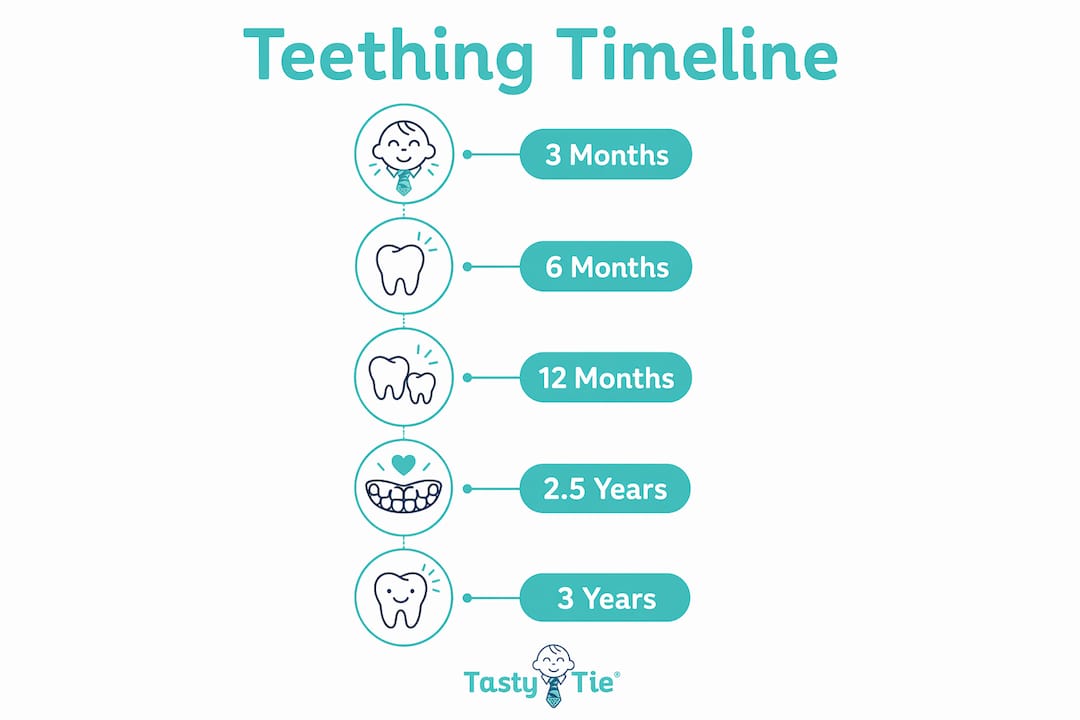
The misconception that boys teethe later or differently than girls likely comes from parents comparing notes and noticing natural variation. That variation exists within each sex, not between them.
What should you do when your baby boy starts teething?
When teething begins, your job is to manage comfort and start building good oral hygiene habits at the same time. Here is a practical sequence to follow:
- Offer safe chewing objects. Firm rubber teething toys, chilled (not frozen) teething rings, or a clean damp washcloth give your baby something safe to press against sore gums. Avoid teethers with liquid filling that could break.
- Try gentle gum massage. A clean finger pressed gently against the gum line provides counter-pressure that many babies find soothing.
- Start brushing as soon as the first tooth appears. The American Academy of Pediatrics recommends beginning oral care at first eruption, not at toddler age. Use a soft infant toothbrush with a rice-grain-sized smear of fluoride toothpaste.
- Manage drool proactively. Constant drool causes skin irritation around the mouth and chin. Keep the area dry with a soft cloth and apply a gentle barrier cream if redness develops.
- Know when to call the doctor. A temperature of 100.4°F or above, diarrhea, or prolonged crying that does not respond to comfort measures all warrant a call to your pediatrician. These are not teething symptoms.
If your baby boy has no teeth by 18 months, consult a pediatric dentist. Delayed eruption can have underlying causes worth evaluating, though many cases resolve on their own.
Pro Tip: Keep a clip-on teething toy attached to your baby’s outfit so it stays within reach at all times. This is especially useful during outings when dropped teethers become a hygiene problem.
What is the typical sequence and duration of teething episodes?
Each tooth follows its own mini-cycle of discomfort. Understanding the pattern helps you anticipate what is coming rather than being surprised each time.
| Phase | What happens | Typical duration |
|---|---|---|
| Pre-eruption | Gum swelling, drooling, fussiness begin | 3 to 5 days before tooth appears |
| Eruption | Tooth breaks through gum line | 1 to 3 days of peak discomfort |
| Post-eruption | Symptoms ease as tooth settles | 1 to 3 days of gradual improvement |
| Full episode | Total discomfort window per tooth | Approximately 3 to 8 days |
Each tooth’s eruption causes discomfort lasting about 3 to 8 days. With 20 primary teeth arriving over roughly 2.5 years, you will move through many of these cycles. The good news is that most parents report the first few teeth feel like the hardest, partly because the experience is new and partly because the first molars, which arrive around 13 to 19 months, tend to cause more discomfort than the incisors.
Symptoms may seem to disappear for weeks between teeth and then return suddenly. This is normal. The newborn to teething transition is gradual, and the process continues in waves rather than as one continuous stretch of discomfort.
What I’ve learned about teething variability after working with thousands of parents
Here is what I find most parents need to hear: the timeline matters far less than the symptoms in front of you. I have seen parents stress deeply because their son had no teeth at 9 months while a neighbor’s baby had four. Both babies were completely healthy. The American Academy of Pediatrics agrees that variability is the norm, not the exception.
What actually helps is shifting your focus from “when will the tooth arrive” to “how can I make my baby comfortable right now.” That means having the right tools ready before teething starts, not scrambling once your baby is already miserable. It also means starting dental hygiene habits early, because the teeth that arrive at 6 months will still be in your child’s mouth at age 6 or 7. Early care protects them for years.
My honest observation is that parents who prepare for teething as a multi-year process, rather than a single event, handle it with far less anxiety. You will get good at reading your baby’s specific signals. You will know which soothing methods work for him. And you will realize, somewhere around the second or third tooth, that you have this handled.
— Tasty
Teething relief designed for baby boys
When teething starts, having the right gear makes a real difference. Tastytie’s award-winning teething tie is designed specifically for baby boys between 3 and 12 months. It clips directly to your baby’s outfit, so it stays within reach and never hits the floor. Made from GOTS-certified organic cotton, it absorbs drool, makes a satisfying crinkle sound that keeps babies entertained, and is fully machine washable. With over 35,000 units sold and a 4.7-star rating on Amazon, it is one of the most practical and stylish teething accessories available for baby boys. Parents love that their babies can self-soothe and self-entertain, whether at home or on the go.
FAQ
When do boys typically start teething?
Baby boys typically start teething around 6 months of age, though the normal range spans from 3 to 12 months. The first teeth to appear are almost always the lower central incisors.
Does teething cause fever in baby boys?
Teething does not cause a true fever. A temperature of 100.4°F (38°C) or higher indicates infection, not teething, and you should contact your pediatrician.
How long does each teething episode last for boys?
Each tooth’s eruption episode lasts approximately 3 to 8 days, including the days before and after the tooth breaks through the gum line.
Is there a difference in teething age for boys vs. girls?
Sex does not substantially affect teething timing. Boys and girls follow the same general teething timeline, with individual genetics and development pace being the main variables.
What if my baby boy has no teeth by 18 months?
If your baby has no teeth by 18 months, consult a pediatric dentist. Delayed eruption can have underlying causes worth evaluating, though many cases are simply a matter of natural variation.

