


Teething Symptoms in Baby Boys: What to Expect
TL;DR:
- Teething in baby boys usually begins between 6 and 12 months, with symptoms often appearing 3 to 4 days prior. Most discomfort lasts a few days and can be eased with safe, simple remedies like chilled teething toys and gentle gum massages. Symptoms that persist or worsen may indicate illness and should prompt a pediatrician’s evaluation.
Around 3 months old, your little guy may start drooling like a champ, gnawing on his fists, and waking up more than usual. Sound familiar? Recognizing teething symptoms in baby boys can feel confusing, especially when these signs overlap with common illnesses. Many parents worry they’re missing something serious, when in reality, their baby is simply cutting his first teeth. This guide walks you through what’s normal, what’s not, and how to keep your boy comfortable from the first signs of teething all the way through that full grin.
Table of Contents
- When does teething start in baby boys?
- Common teething symptoms in baby boys
- Symptoms that are not from teething
- How to soothe teething discomfort in baby boys
- My honest take on teething, from experience
- The TastyTie teething tie: built for baby boys
- FAQ
When does teething start in baby boys?
Teething typically begins between 6 and 12 months, though some babies show signs as early as 3 months. Genetics play a big role here. If you or your partner teethed early, there’s a good chance your son will too. The teething age for boys follows the same general timeline as girls, though every baby’s schedule is uniquely his own.
Here’s something many parents don’t realize: symptoms appear 3 to 4 days before a tooth ever breaks through the gum. That means your baby can seem uncomfortable for days with nothing visible to show for it. It’s not your imagination. His gums are already under pressure.
The typical order of tooth eruption looks like this:
- Bottom front teeth (central incisors): Usually first, around 6 to 10 months
- Top front teeth (central incisors): Follow closely, around 8 to 12 months
- Lateral incisors: Upper and lower, typically by 9 to 13 months
- First molars: Around 13 to 19 months
- Canines: Around 16 to 22 months
- Second molars: Last to arrive, usually by 2.5 to 3 years
In rare cases, a baby may show no symptoms of teething at all and surprise you with a tooth one morning. On the other end, some babies begin showing early teething signs as young as 3 months without a tooth erupting for another few months. Both situations are completely normal.
Common teething symptoms in baby boys
Knowing the common teething symptoms makes a real difference. It helps you respond calmly instead of rushing to the doctor for something that resolves on its own in a few days.
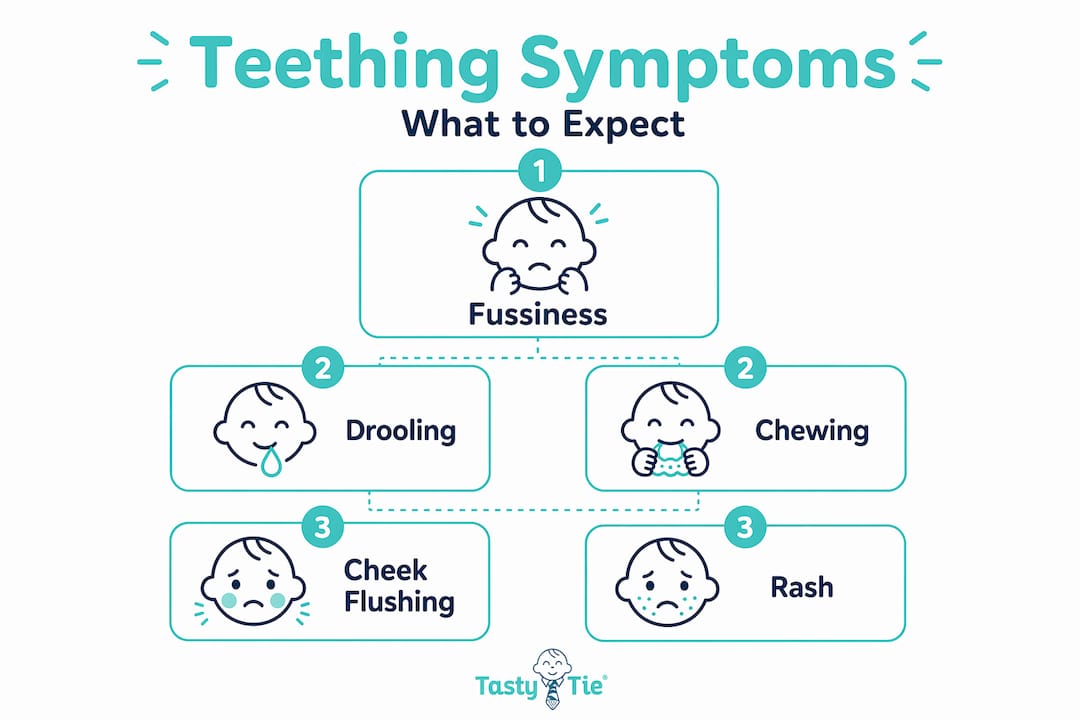
Fussiness peaks in the days before a tooth breaks through and typically eases once the tooth is visible. That window is usually 3 to 4 days of increased crankiness, not weeks. If your baby seems uncomfortable for much longer, something else may be going on.
Here’s a quick comparison to help you sort out what you’re seeing:
| Symptom | Normal teething | May indicate illness |
|---|---|---|
| Drooling | Heavy, constant | Less relevant |
| Temperature | Slightly elevated, below 100.4°F (38°C) | 100.4°F (38°C) or higher |
| Fussiness | Mild, improves after tooth erupts | Severe or worsening |
| Gum appearance | Red, swollen near eruption site | No visible change |
| Sleep disruption | Mild, short-term | Prolonged, with other symptoms |
| Appetite | Slightly reduced | Significant refusal with lethargy |
| Rash | Localized around mouth from drool | Widespread across body |
| Diarrhea | Not caused by teething | Could signal illness |
A few symptoms that show up in baby boys teething pain are worth knowing in detail:
Drooling and drool rash. Your son may soak through a bib in an hour. The excess moisture can cause a mild rash around his chin, cheeks, and neck. Gently patting the area dry helps prevent irritation.
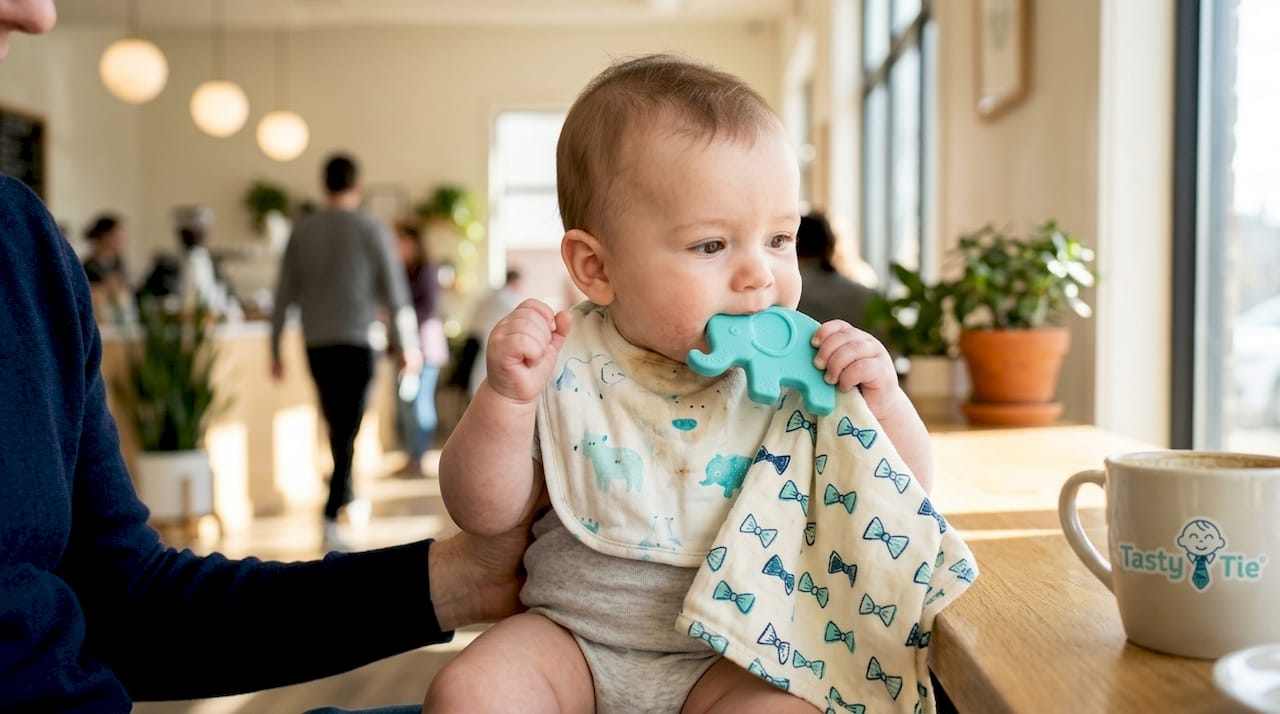
Gum rubbing and chewing. He’ll chew on anything within reach, including your fingers, his toys, and the edge of his crib. This is his way of applying counter-pressure to the sore spot in his gum.
Cheek flushing and ear rubbing. Nerve pathways in the jaw connect to the cheek and ear region. Some baby boys rub their ears when a back tooth is coming in. This is often confused with an ear infection, so watch for other signs if it persists.
Pro Tip: Track which days your baby seems most uncomfortable. If the fussiness peaks for 3 to 4 days and then settles, that pattern strongly suggests a tooth is about to break through. This timeline is your best friend for staying calm and in control.
Symptoms that are not from teething
This is where a lot of unnecessary worry happens. Maternal antibodies start fading around 6 months, right when teething begins. Your baby becomes more susceptible to colds and viruses at the exact same time his first teeth arrive. The overlap makes it easy to blame teething for everything.
These symptoms are not caused by teething and should prompt a call to your pediatrician:
- A fever at or above 100.4°F (38°C). This temperature is not from teething and needs medical attention.
- Diarrhea or vomiting. Experts are clear these are signs of illness, not teething.
- A widespread rash that covers the torso or limbs.
- Severe or inconsolable crying that does not settle.
- Lethargy or unresponsiveness.
- Symptoms that worsen over several days rather than improving.
Symptom escalation over days is a key signal. Teething gets better once the tooth breaks through. Illness tends to worsen or plateau. Use that distinction to guide your decisions.
When in doubt, call your pediatrician. There is no downside to checking. A quick call can rule out illness and put your mind at ease. Trust your instincts as a parent. If something feels off beyond what teething explains, get it evaluated.
How to soothe teething discomfort in baby boys
The good news is that most teething discomfort in babies responds well to simple, safe strategies. You do not need a cabinet full of products. You need a few reliable tools and a calm approach.
Here’s what actually works:
- Cool a teething toy in the fridge. Refrigerator cooling is safe and effective. Never freeze teething toys. Frozen items can be too hard and damage your baby’s sensitive gum tissue.
- Try a clean damp washcloth. Chill it in the fridge and let your baby gnaw on it. It’s soft, safe, and costs nothing.
- Massage his gums gently. Use a clean finger to apply light pressure to the sore gum area. Many babies respond well to this, especially in the first few seconds before they start chewing on your knuckle instead.
- Use infant acetaminophen or ibuprofen if needed. Both are safe for babies over 3 months when used according to dosing guidelines. Always check with your pediatrician before giving any medication.
- Distract and comfort him. Extra cuddle time, outdoor walks, and engaging play can take his mind off the discomfort. Teething discomfort is usually mild enough that a good distraction genuinely helps.
- Skip the benzocaine gels and amber teething necklaces. Benzocaine in over-the-counter teething gels poses serious risks for infants. Amber necklaces are a strangulation and choking hazard. Neither is worth the risk.
For teething remedies for baby boys on the go, consider a clip-on teething toy. It stays attached to your baby’s outfit so it never hits the floor, and your boy can self-soothe without needing you to constantly retrieve it. Check out these teething relief options designed specifically for babies aged 3 to 12 months.
Pro Tip: When packing your diaper bag, always include one teething toy that clips to your baby’s outfit. Loose teethers fall on floors constantly. A clip-on option stays clean, stays accessible, and lets your baby soothe himself while you keep your hands free.
My honest take on teething, from experience
I’ve watched many parents come to us completely stressed out, convinced their son is in serious pain or seriously sick. And I get it. The first time your baby is inconsolable at 2 a.m. and you can’t figure out why, you go to worst-case scenarios fast.
What I’ve found, again and again, is that parents tend to overestimate how severe teething is. When a baby boy is fussy for a day or two and then suddenly pops a tooth and goes back to his happy self, parents often say, “I had no idea that’s all it was.” The truth is, teething discomfort is typically mild and should not completely derail your baby’s mood or routine for more than a few days.
What worked in my experience? Consistent distraction and a reliable clip-on teething toy that stayed clean and accessible. What did not work? Overthinking every symptom and reaching for remedies before they were needed.
My advice is this: watch the pattern, trust the timeline, and stay calm. If symptoms clear up once that tooth appears, you have your answer. If they don’t, call the doctor. You’re not overreacting by checking.
— Tasty
The TastyTie teething tie: built for baby boys
When your baby boy is in the middle of a teething stretch, you want something that works without adding more to your plate. That’s exactly what the TastyTie teething tie was designed for. It clips directly onto your son’s outfit, absorbs drool, and gives him something safe to chew on wherever you are. It crinkles to hold his attention, it’s made from organic cotton, and it’s machine washable. No more teethers on the floor, no more fumbling through the diaper bag mid-meltdown.
With over 35,000 units sold and a 4.7-star rating from real parents, it’s a product people genuinely love. Visit TastyTie to explore the full range of teething accessories designed specifically for baby boys aged 3 to 12 months.
FAQ
What are the first teething symptoms in baby boys?
The earliest signs include heavy drooling, chewing on hands or objects, and mild irritability. These symptoms often appear 3 to 4 days before a tooth is visible.
Is my baby boy teething or sick?
If your baby’s temperature is below 100.4°F (38°C) and symptoms improve once a tooth erupts, it’s likely teething. A fever at or above 100.4°F, diarrhea, or worsening symptoms point to illness and need a pediatrician’s evaluation.
What is the teething age for boys?
Most baby boys begin teething between 6 and 12 months, though signs can start as early as 3 months. All 20 baby teeth typically arrive by age 2.5 to 3 years.
What teething remedies are safe for baby boys?
Safe options include chilled (not frozen) teething toys, clean damp washcloths, gentle gum massage, and infant acetaminophen or ibuprofen for babies over 3 months with pediatrician guidance. Avoid benzocaine gels and amber necklaces.
How long do teething symptoms last?
Each teething episode typically peaks for 3 to 4 days before and just after tooth eruption. Symptoms that last significantly longer or worsen over time are likely not from teething alone.

