


Why Organic Cotton Is Better Than Polyester for Babies
TL;DR:
- Organic cotton grown under GOTS standards reduces chemical exposure from pesticides and synthetic fertilizers, making it safer for babies. Certified garments with OEKO-TEX Standard 100 Class I ensure minimal harmful residues, while breathable fabrics help prevent skin rashes and overheating. Prioritize certified organic cotton for close-to-skin items and always wash new clothes before use to remove manufacturing residues.
When you’re dressing a newborn, fabric choice feels like a small detail. It isn’t. The question of why organic cotton is better than polyester for babies goes deeper than comfort preferences. It touches on chemical safety, skin health, and how well a garment has been tested before it ever touches your baby. The challenge is that “natural” doesn’t automatically mean safe, and “synthetic” doesn’t automatically mean harmful. What actually matters are certifications, chemical residues, and garment quality. Here’s what the evidence says.
Table of Contents
- Why organic cotton is better than polyester for babies: starting with skin
- Understanding fabric safety certifications for baby clothing
- Organic cotton vs. polyester: comfort, breathability, and health
- Practical tips for selecting and caring for baby clothing
- My honest take on organic cotton and realistic expectations
- Tastytie’s take: organic cotton comfort built into every detail
- FAQ
Why organic cotton is better than polyester for babies: starting with skin
Baby skin is not just softer than adult skin. It’s structurally different. It’s thinner, more permeable, and absorbs substances more readily than adult skin does. That means whatever is on or in a fabric, including chemical residues from manufacturing, has a higher chance of being absorbed into a baby’s body.
The concern isn’t limited to the fiber itself. Textiles commonly carry residues from dyes, formaldehyde-based finishing agents, and other processing chemicals. These can remain in garments after manufacturing, even after rinsing at the factory level. Both polyester and conventionally grown cotton can carry these residues.
Here’s where the distinction gets meaningful:
- Polyester is a plastic-based fiber derived from PET polymers. The manufacturing process involves petrochemicals and synthetic dyes, and polyester can trap heat and moisture against the skin, which increases the risk of rashes and irritation, particularly for babies prone to eczema.
- Conventional cotton is grown with pesticides and synthetic fertilizers. The finished fabric may carry residues unless processed under certified standards.
- Organic cotton grown under GOTS rules prohibits pesticides, GMOs, and synthetic fertilizers, reducing the chemical load from the very start of production.
Pro Tip: Many irritation cases blamed on fabric type are actually caused by chemical residues in dyes or finishing agents, not the fiber itself. Even elastic bands and care labels can be sources of irritation when not tested.
Understanding fabric safety certifications for baby clothing
This is where most parents get the most value, and where most shopping guides fall short. Two certifications matter most: OEKO-TEX Standard 100 Class I and GOTS.
OEKO-TEX Standard 100 Class I is designed specifically for products that come into direct contact with baby skin. It tests the finished garment, including every component: fibers, dyes, trims, elastic, and labels. OEKO-TEX Class I limits for formaldehyde and other toxins are at levels that are nearly undetectable, making it one of the strictest finished-product standards in textiles. The critical point: this certification applies to the whole garment, not just the fabric roll.
GOTS (Global Organic Textile Standard) goes further upstream. It covers the entire supply chain, from farm to finished product. GOTS requires at least 95% certified organic fiber for an “organic” grade designation and bans formaldehyde and carcinogenic dyes outright. It also includes social and environmental criteria along the full supply chain, so parents get both chemical safety and ethical manufacturing in one label.
Here’s a comparison to help you shop with confidence:
| Criteria | OEKO-TEX Class I | GOTS Certified |
|---|---|---|
| What it tests | Finished garment, all components | Entire supply chain, fiber to garment |
| Formaldehyde limits | Near undetectable | Completely banned |
| Fiber type required | Any fiber (including polyester) | Minimum 95% certified organic fiber |
| Chemical dye restrictions | Yes, strict limits | Yes, carcinogenic dyes banned |
| Social/ethical criteria | No | Yes |
| Best used for | Verifying finished garment safety | Verifying organic sourcing and processing |
Pro Tip: A garment can carry OEKO-TEX Class I certification even if it contains polyester, which means the certification tells you more about chemical residue levels in the finished product than it does about fiber origin. When in doubt, look for both certifications on organic cotton baby clothes.
Organic cotton vs. polyester: comfort, breathability, and health
Setting certifications aside for a moment, the physical properties of each fiber tell their own story for baby comfort.
Natural fibers like cotton help regulate temperature more effectively than polyester, keeping babies comfortable and reducing rash risk. This is especially relevant during sleep, when babies are wrapped in clothing for hours at a time. Overheating is a known risk factor in infant health, making breathability a practical safety concern, not just a comfort preference.
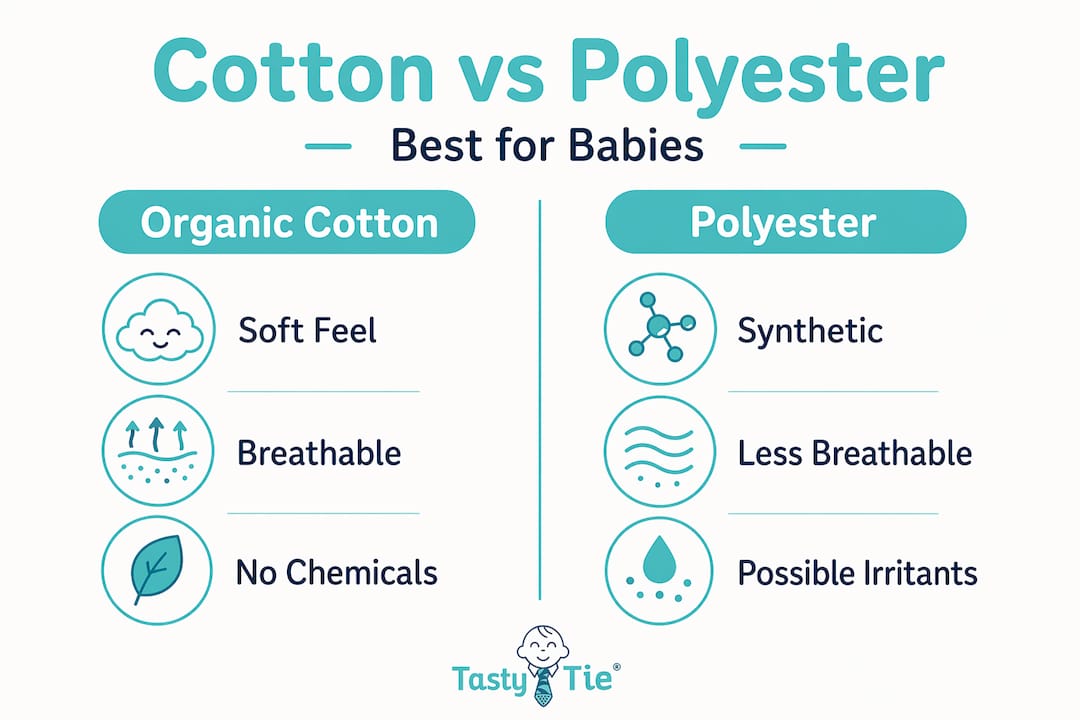
Polyester tends to hold heat and wick moisture differently. In active performance contexts, that can be a feature. Against a baby’s sensitive skin during daily wear, it can lead to sweat accumulation and the kind of friction that triggers redness and rashes. Parents managing eczema-prone baby skin almost universally find that soft, breathable fabrics make a measurable difference in flare frequency.
A few more points worth knowing:
- Organic cotton fabric is naturally soft and gets softer with washing, making it well-suited for newborn skin that hasn’t toughened at all yet.
- Polyester is plastic-based, which means it sheds microplastics with every wash. These microplastics enter water systems, making polyester a more significant environmental concern than cotton for eco-conscious parents choosing healthier fabric options for babies.
- Polyester isn’t categorically off-limits. Used in outerwear or performance layers, it can make sense. For close-to-skin items like onesies, sleepwear, and underlayers, organic cotton is the stronger choice.
Practical tips for selecting and caring for baby clothing
Knowing what to look for makes shopping faster and less stressful. Here’s a practical approach:
- Check for GOTS and OEKO-TEX Class I labels first. These are your most reliable indicators of safe organic materials for baby clothing. If a brand claims “organic cotton” but carries no certification, the claim is unverified.
- Prioritize organic cotton for close-to-skin items. Sleepwear, onesies, swaddles, and any item worn for long stretches should be your first focus. A GOTS certified bodysuit is worth the slight price premium for these categories.
- Understand where polyester can be acceptable. Outerwear, structured carriers, and water-resistant layers may include polyester without meaningful skin contact. If OEKO-TEX certified, the chemical residue risk is substantially lower.
- Wash before first wear. Even certified garments benefit from a pre-wash to remove any remaining manufacturing residues. Use a fragrance-free, dye-free detergent.
- Watch your baby’s skin responses. Redness or rash after wearing a specific garment is information. Do a simple observation test: remove the item for a few days and see if the irritation clears.
Pro Tip: When gifting baby clothing, GOTS or OEKO-TEX certification details make a meaningful addition to a gift tag. Parents who care about eco-friendly baby clothing choices notice and appreciate it.
My honest take on organic cotton and realistic expectations
I’ve learned that the organic cotton label carries real meaning, but only when it’s backed by testing and certification. In my experience, parents sometimes feel reassured by “natural” language that has no third-party verification behind it, and that false confidence is worth addressing directly.
Organic cotton grown and finished under GOTS standards genuinely does reduce the chemical load your baby is exposed to. That matters. At the same time, I’ve seen babies with very sensitive skin react to certified organic cotton garments because of a dye or a trim that wasn’t fully evaluated. The garment as a whole is what counts, not just the fiber headline.
The peace of mind that comes from choosing well-certified organic cotton baby clothes is real and earned. It’s not paranoia to want the safest possible fabric against your newborn’s skin. It’s one of the simplest protections you can provide, and the evidence supports it. When the whole garment checks out, certified organic cotton is consistently the most comfortable, lowest-risk option for daily baby wear.
— Tasty
Tastytie’s take: organic cotton comfort built into every detail
At Tastytie, we built our teething tie with organic cotton because we know how much time babies spend chewing, drooling, and pressing fabric against their mouths. Our award-winning teething tie clips directly to outfits, absorbs drool, crinkles to entertain, and is machine washable. It’s designed for baby boys ages 3 to 12 months and made with the same fabric standards you’re researching here. When you’re already being careful about what touches your baby’s skin, it makes sense for every accessory, including the teether, to meet that same standard.
FAQ
Why is organic cotton safer than polyester for baby clothes?
Organic cotton grown under GOTS certification is produced without synthetic pesticides and processed without formaldehyde or carcinogenic dyes, significantly reducing the chemical residues that touch baby skin. Polyester is a plastic-based fiber that can trap heat and moisture and may carry finishing chemical residues unless OEKO-TEX certified.
What certifications should I look for on baby clothing?
Look for GOTS certification for organic sourcing and full supply chain accountability, and OEKO-TEX Standard 100 Class I for verified low chemical residue levels in the finished garment, including dyes, trims, and labels.
Can polyester ever be safe for babies?
Yes, in limited contexts. OEKO-TEX Class I certified polyester garments meet strict chemical residue limits. Polyester is more appropriate for outerwear and structured items than for close-to-skin daily wear, where breathable organic cotton performs better for comfort and skin health.
Does organic cotton prevent skin rashes?
Organic cotton reduces common irritation triggers like heat buildup and chemical residues, but it doesn’t guarantee rash prevention. Whole-garment testing matters too, since dyes and elastic components can still cause reactions even on natural fiber clothing.
Should I wash new organic cotton baby clothes before use?
Yes. Even GOTS and OEKO-TEX certified garments benefit from a pre-wash with fragrance-free detergent to remove any residual manufacturing substances before the clothing contacts your baby’s skin.

