


Newborn to Teething Transition Explained for Parents
TL;DR:
- Most babies start teething between four and seven months, with normal variation up to twelve months.
- Teething causes mild symptoms like gum swelling, drooling, and a strong urge to chew, but not true fever or significant illness.
The newborn to teething transition explained clearly can feel like exactly what you needed six weeks ago. Most parents are caught off guard — not by teething itself, but by how early it can start, how unpredictable the symptoms are, and how many things get blamed on teeth that have nothing to do with them. Your baby might be drooling rivers at four months or seem perfectly content until a tooth pushes through at ten months. Both are normal. This guide walks you through the real timeline, the actual symptoms, early dental care, and practical ways to keep your baby comfortable.
Table of Contents
- Newborn to teething transition: timeline and stages
- Real teething symptoms vs. common myths
- Newborn dental care: starting early
- How to soothe a teething baby safely
- What I’ve actually seen help parents through this
- A teething solution that goes wherever you go
- FAQ
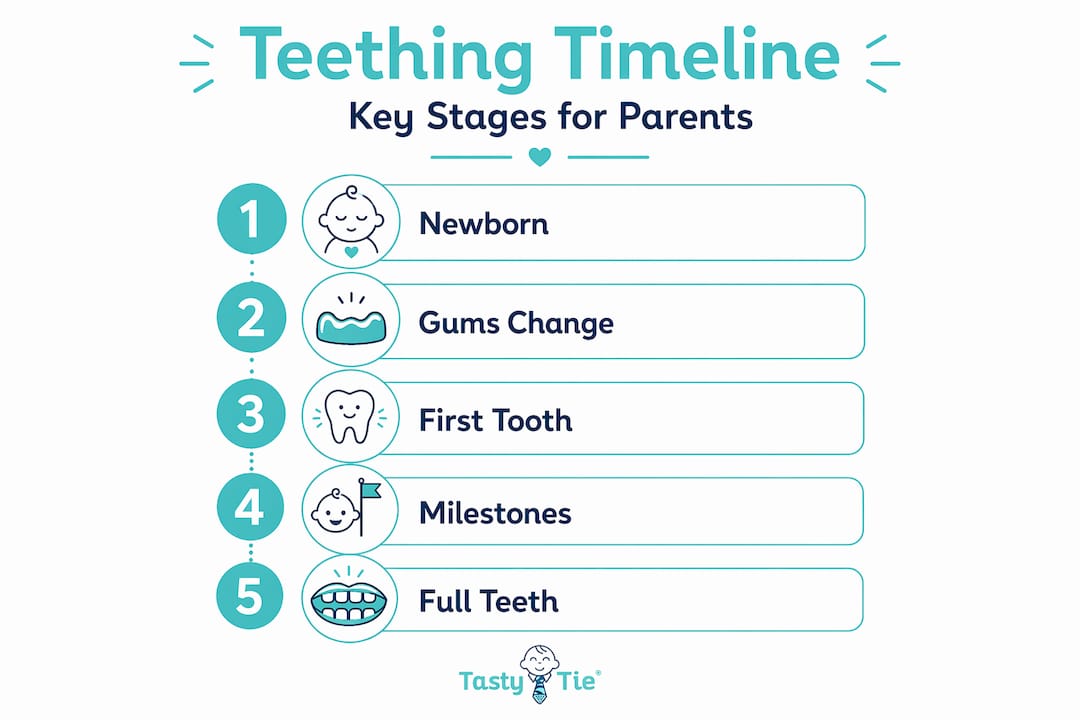
Newborn to teething transition: timeline and stages
Understanding when teething typically starts helps you stop second-guessing every fussy afternoon. Most babies begin teething between four and seven months, though the full range stretches from three to twelve months. Neither end of that range signals a problem.
The lower central incisors, the two bottom front teeth, almost always arrive first. Upper central incisors follow a few weeks to months later. From there, the lateral incisors, first molars, canines, and second molars fill in gradually over the next two years. By age three, most children have a full set of twenty primary teeth.
Teething overlaps with some genuinely exciting developmental milestones. Babies in this window are also gaining head control, rolling, sitting up, and developing the fine motor skills that make grabbing and chewing objects irresistible. That urge to chew everything in sight is not random. It is a direct response to the gum pressure building beneath the surface.

Here is a general reference for the typical teething order:
| Tooth Type | Usual Eruption Age |
|---|---|
| Lower central incisors | 6–10 months |
| Upper central incisors | 8–12 months |
| Upper lateral incisors | 9–13 months |
| Lower lateral incisors | 10–16 months |
| First molars | 13–19 months |
| Canines | 16–23 months |
| Second molars | 23–33 months |
One more thing worth knowing: some babies are born with teeth, called natal teeth, or develop them within the first month. This is uncommon and usually harmless, but a pediatric dentist should check if any early tooth appears loose or affects feeding.
Real teething symptoms vs. common myths
This is where a lot of parental anxiety lives. And honestly, a lot of it is avoidable once you know what teething actually causes and what it does not.
Teething produces mild, localized symptoms that follow a predictable pattern. Discomfort peaks in the two to three days before a tooth breaks through and fades quickly once it does. The most common signs include:
- Swollen, tender gum tissue near the erupting tooth
- Increased drooling, sometimes significant enough to cause a chin rash
- A strong urge to chew on anything within reach
- Mild fussiness that comes and goes rather than lasting all day
- Slight changes in appetite due to gum sensitivity
What teething does not cause is the part most parents get wrong. Teething does not cause true fever, defined as a temperature at or above 100.4°F. If your baby has a fever at that level, look for another explanation. The same goes for diarrhea, significant sleep disruption, and prolonged inconsolable crying. Over-attributing these symptoms to teething delays finding the real cause, which could be an ear infection, a virus, or something else that genuinely needs attention.
Teething discomfort typically lasts only a few days per tooth eruption. If what you are seeing stretches beyond that window or intensifies rather than improving, call your pediatrician. That is not overcautious. That is exactly the right call.
Pro Tip: Keep a simple symptom log during teething periods. Note the date, the symptom, and how long it lasts. A pattern of short, mild episodes that resolve in two to four days is classic teething. Anything outside that pattern deserves a closer look.
Newborn dental care: starting early
Most parents wait until multiple teeth appear before thinking about oral hygiene. That is too late. Newborn dental care starts before the first tooth ever shows up, and the habits you build now shape your child’s oral health for years.
Before any teeth arrive, wipe your baby’s gums with a clean, damp cloth after feedings. This removes bacteria and gets your baby comfortable with the sensation of mouth care. When the first tooth appears, move to a soft-bristled infant toothbrush.
- Start brushing immediately. Use a rice-grain-sized amount of fluoride toothpaste as soon as the first tooth erupts. Fluoride is safe at this size.
- Schedule the first dental visit on time. The first visit should happen by your baby’s first birthday or within six months of the first tooth appearing, whichever comes first.
- Ask about fluoride varnish. Fluoride varnish can start at six months during regular pediatric well-child visits and continues twice a year until age five. It is safe, effective, and typically covered by insurance.
- Avoid putting babies to sleep with a bottle. Milk or juice pooling around teeth overnight is one of the fastest ways to cause early childhood cavities.
- Supervise brushing consistently. Twice-daily brushing with fluoride toothpaste is the goal, with supervision recommended until around age ten to make sure the technique is actually working.
Pro Tip: Tie dental care to an existing routine, like right after the morning feeding and before the last feeding of the night. Babies thrive on predictability, and pairing brushing with something familiar makes resistance less likely.
How to soothe a teething baby safely
Once you know what you are dealing with, the question becomes what actually helps. There is a lot of noise on this topic, so here is what is genuinely safe and effective.
- Chilled (not frozen) teething toys. Cold reduces inflammation and numbs gum tissue temporarily. Frozen items can be too hard and damage delicate gums. Keep a few teethers in the fridge so there is always one ready.
- A clean, cool washcloth. Wet it, wring it out, and let your baby chew on it. Simple, free, and effective.
- Supervised chewing on safe objects. Teething causes increased chewing due to gum pressure, so babies need outlets. Supervision keeps choking hazards in check and lets you monitor what is going in the mouth.
- Extra bibs and absorbent layers. Drool rash on the chin and chest is a real side effect of heavy teething. Staying ahead of the moisture makes your baby more comfortable and reduces skin irritation.
- Wearable teething solutions. Clip-on teething toys are worth considering because they stay within reach, do not hit the floor, and let babies self-soothe independently without constant parental intervention.
Skip benzocaine-based numbing gels for infants. Major health organizations advise against them due to safety concerns with young babies. Gum massage with a clean finger is a safer hands-on approach.
What I’ve actually seen help parents through this
I’ve spent a lot of time talking with parents navigating the newborn to toddler growth window, and the same worry comes up again and again: “Is this teething or is something wrong?” My honest take is that most parents instinctively know when something feels off. Trust that. Understanding teething discomfort in clear terms gives you a baseline, but your knowledge of your own baby matters just as much as any chart.
What I’ve found actually helps is resisting the urge to explain every hard day as “just teething.” That habit leads to missed infections and overlooked illnesses. The flip side is also true. Panicking over mild drooling and fussiness wastes energy you genuinely need. The middle ground is awareness without anxiety, and that comes from knowing the real timeline and real symptoms.
Starting oral hygiene early is one of those habits that pays off quietly. Parents who build it in from the first tooth rarely have battles over brushing at age three. The earlier it becomes part of the routine, the less drama it causes later.
— Tasty
A teething solution that goes wherever you go
When your baby starts chewing on everything in sight, having the right teething toy matters. The TastyTie teething tie is designed specifically for baby boys aged three to twelve months, which lines up perfectly with the teething window we covered above. It clips directly onto any outfit, so it stays clean and within reach whether you are at home or packing for an outing. Made from organic cotton, it absorbs drool, makes a crinkle sound that entertains, and is machine washable. No more hunting for a dropped teether on a restaurant floor. The award-winning TastyTie has over 35,000 units sold and a 4.7-star rating on Amazon because it genuinely solves the problems parents face every day during teething.
FAQ
When does the newborn to teething transition typically start?
Most babies begin teething between four and seven months, though anywhere from three to twelve months is considered normal. The lower front teeth almost always come in first.
Does teething cause fever?
No. Teething does not cause true fever at or above 100.4°F. A fever at that level signals illness, not teething, and should be evaluated by a doctor.
How long does teething discomfort last per tooth?
Discomfort typically lasts a few days per tooth, peaking just before eruption and resolving quickly afterward. Symptoms lasting longer than that warrant a call to your pediatrician.
When should I schedule my baby’s first dental visit?
The first dental visit should happen by your baby’s first birthday or within six months of the first tooth appearing. Early visits establish a dental home and set the foundation for preventive care.
What are the safest ways to soothe a teething baby?
Chilled (not frozen) teething toys, clean cool washcloths, and supervised chewing on safe objects are the most reliable options. Avoid benzocaine-based gels, and skip frozen items that could be too firm for tender gums.

