


How to pack teething toys for on-the-go comfort
TL;DR:
- Choosing travel-friendly teething toys requires focus on safety, multiple textures, easy handling, and simple cleaning to prevent hygiene issues.
- Organizing items in separate pouches and rotating between clean and used teethers helps keep outings calm and safe for both baby and parent.
You’re five minutes from leaving the house, your baby boy is drooling through his third outfit, and you’re staring at a pile of teething toys wondering which ones actually make sense to throw in the diaper bag. That moment of decision is more important than it seems. The wrong teething toy on a day out means a dropped, dirty chewer rolling under a restaurant table, a fussy baby with nothing clean to gnaw on, and a stressed-out parent digging through a messy bag. This guide walks you through exactly what to pack, how to store it, and how to keep outings calm and manageable for both you and your baby.
Table of Contents
- What makes a good on-the-go teething toy?
- Checklist: Essential items for teething on the move
- Step-by-step: How to pack and manage teething toys on-the-go
- Common mistakes to avoid when packing teething toys
- Expert perspective: Why simple, smart prep beats over-packing
- Need travel-friendly teething comfort? Discover TastyTie®
- Frequently asked questions
Key Takeaways
| Point | Details |
|---|---|
| Prioritize easy-clean options | Choose teething toys that are easy to sanitize and safe for frequent reuse. |
| Pack two teethers | Always bring one clean and one backup teething toy for hassle-free outings. |
| Avoid choking hazards | Select toys with no loose parts and safe size/shape to prevent any risk. |
| Use separate pouches | Store used teething toys separately to keep your diaper bag clean and hygienic. |
| Simple system works best | Over-packing creates stress; just a few well-chosen items cover all scenarios. |
What makes a good on-the-go teething toy?
Not every teething toy that works at home is suited for travel. At home, you have running water, a dish rack, and backup options in every room. On the go, you have a limited bag, unpredictable access to cleaning supplies, and a baby who doesn’t care about any of that.
The best travel teethers share a few core qualities. According to pediatric product guidance, portable teething solutions should prioritize easy handling for small hands, multiple textures for gum stimulation, and simple cleaning. Those three features alone will rule out a surprising number of popular teethers that look great on a shelf but fall apart in real-world use.
Here’s what to look for when choosing a travel-ready teether:
- Safe materials: BPA-free, food-grade silicone or organic cotton are top choices. Avoid anything with gel inserts that can leak.
- Multiple textures: Babies get more relief and more sensory engagement when a teether has varied surfaces to explore.
- Easy grip: Small hands need something they can actually hold. Awkward shapes lead to dropped toys.
- Compact size: It needs to fit in a pouch or clip to an outfit without taking over your entire bag.
- Simple cleaning: No deep crevices, no removable parts, no gel pockets. If you can’t rinse it and wipe it clean in 30 seconds, it’s a problem on the road.
Products designed for compact storage and quick access are ideal because they’re built with the parent’s reality in mind, not just the baby’s gum line.
| Feature | Why it matters on the go |
|---|---|
| BPA-free or organic materials | Baby’s safety, especially with prolonged mouthing |
| Multiple textures | Maintains engagement and provides varied gum relief |
| Easy-grip design | Reduces drops, keeps baby occupied longer |
| Machine washable or rinse-clean | Quick cleanup without needing a full wash station |
| Clips to clothing | Stays accessible, never hits the floor |
One option worth considering is the portable teething tie, which clips directly to your baby’s outfit, absorbs drool, and makes a crinkle sound that keeps babies engaged. It genuinely removes the “dropped toy on the dirty floor” problem that every parent has encountered.
Pro Tip: Look for a teether that does double duty as entertainment. A crinkle texture or bright color keeps babies self-soothing without needing you to constantly hold or replace the toy.
Checklist: Essential items for teething on the move
Once you know what qualities to prioritize, building a reliable packing list becomes straightforward. The goal is to have everything you need without overpacking to the point where your bag becomes a chaotic search-and-rescue mission.
A safe and practical teether should meet a key benchmark: securely integrated, durable parts with no loose accessories, a size and shape that prevents choking, and age-appropriate supervision rules. That standard should guide every item on this list.
Your essential on-the-go teething packing list:
- Two teething toys (one for immediate use, one kept clean as backup)
- Reusable zip pouches to separate clean from used teethers
- Bibs (at least two, organic cotton if possible)
- Baby wipes for quick cleanups
- A clip-on teether or wearable option for hands-free soothing
- A small wet bag for soiled bibs and used teethers
- Hand sanitizer for your own hands before handling teethers
Knowing how to safely attach teether clips to your baby’s outfit is a skill worth learning before your first outing. Improper attachment creates a safety hazard, so take five minutes to understand the right method before you head out.
| Item | Quantity | Purpose |
|---|---|---|
| Teething toys | 2 | One in use, one clean backup |
| Reusable zip pouch | 2 | Separate clean from used items |
| Bibs | 2 | Drool absorption and outfit protection |
| Baby wipes | Small travel pack | Quick surface cleaning on the go |
| Wet bag | 1 | Contain damp or soiled items hygienically |
Most parents who have been through the teething phase agree: the backup teether is the item they’re most glad to have. When one gets dropped, contaminated, or simply rejected by a suddenly opinionated baby, you need something clean and ready.
Step-by-step: How to pack and manage teething toys on-the-go
With a clear checklist, the next step is actually executing the packing routine. Having a system you repeat every single time removes the guesswork and prevents those moments where you’re mid-outing, reaching into your bag and finding nothing usable.
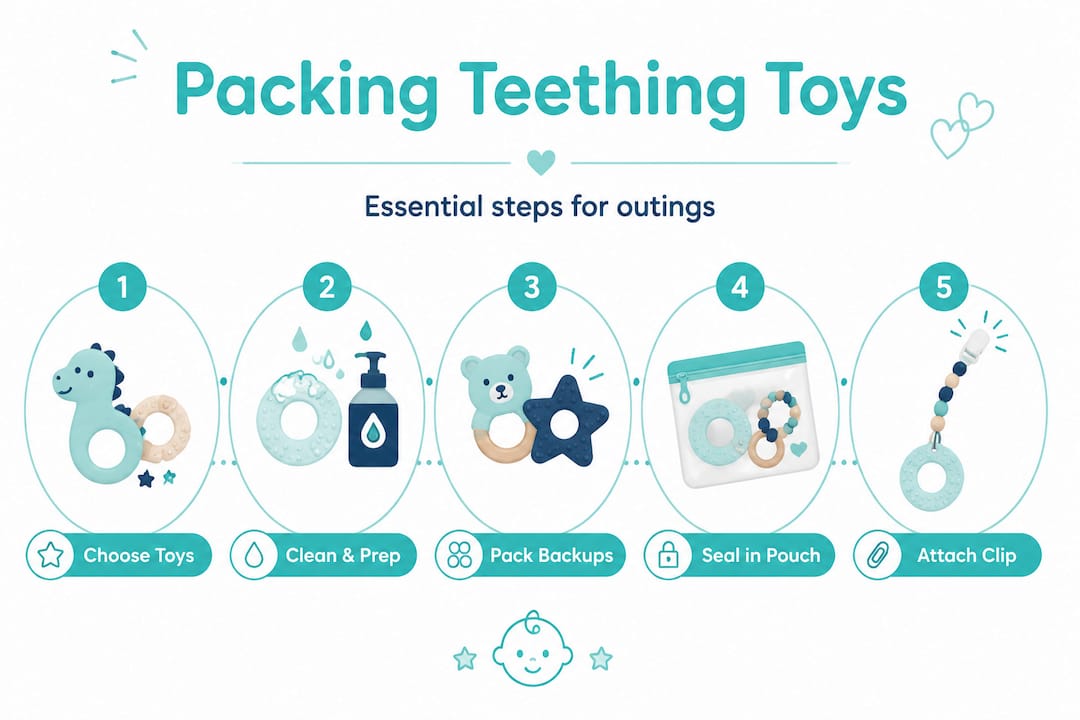
- Sanitize before you pack. Wash all teething toys the night before or early the morning of any outing. Let them dry completely before placing them in pouches.
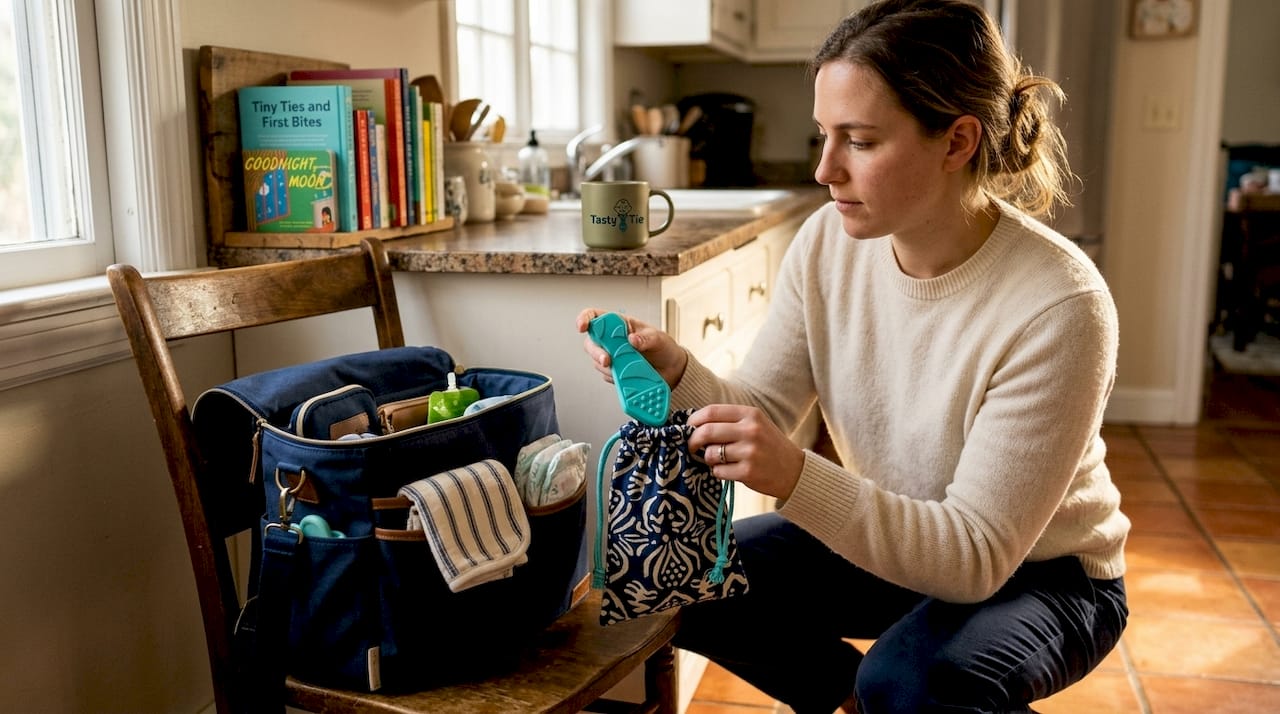
- Pack one in a clean, dry pouch. This is your ready-to-use option. It stays sealed until needed.
- Pack the second teether in a cooled bag if cooling is appropriate. Some teethers benefit from refrigeration for extra relief. Only refrigerate, never freeze.
- Clip your wearable teether directly to your baby’s outfit. This is your front-line option because it’s always accessible, stays off the floor, and lets babies self-soothe independently.
- Check your wet bag is empty and accessible. When a teether gets drool-heavy or falls, it goes straight into the wet bag rather than back into the main pouch.
- Swap and rotate as needed. When the clip-on teether needs a rest, introduce the clean backup from the pouch. Rotate back to freshly cleaned options when you’re home.
“Keep at least two teething items in rotation and store them in a reusable pouch so drool-contaminated surfaces don’t touch other bag contents.” This is the practical standard that organized on-the-go teething is built around.
Pairing toy size and portability with easy cleanup is exactly how experienced parents approach travel play. Light, simple, and washable wins every time. Babies who can independently reach, grab, and chew their teether also benefit from the added bonus of self-soothing teething strategies that support independence and reduce fussiness throughout the day.
Pro Tip: Pack your diaper bag the night before any outing. Rushing through the packing process in the morning is when things get forgotten or tossed in carelessly, and that’s how dirty teethers end up next to clean bottles.
Common mistakes to avoid when packing teething toys
Even well-prepared parents make avoidable errors. Some of these are safety issues and some are hygiene issues. Either way, they’re worth knowing before they become a problem during an outing.
Mistakes that create real problems:
- Packing toys with removable parts or crevices. Teethers with gel inserts or complex designs can harbor bacteria when they can’t be cleaned and dried reliably on the road.
- Freezing teethers instead of chilling them. Refrigerator chilling is recommended; the freezer is not. Frozen teethers can be too hard and may damage tender gums.
- Tossing a used, wet teether back into the main bag. This is how drool contamination spreads to bottles, snacks, and clean items. Use that wet bag.
- Attaching teethers around the neck. This is a serious safety hazard. Always use a proper clip attachment, never a string or loop around the neck.
- Bringing too many toys with no organization system. A disorganized bag means you can’t find what you need quickly, and stressed searching leads to poor decisions.
“The cleanest system is the simplest one.” Parents who maintain a clear two-pouch method (clean and used, always separate) report far fewer hygiene headaches during travel. Check out the teething solutions blog for more practical ideas.
Pro Tip: Do a quick “bag audit” before leaving the house. Open the diaper bag and scan for anything wet, expired, or out of place. Two minutes of checking saves a lot of frustration later.
Expert perspective: Why simple, smart prep beats over-packing
Here’s something most parenting content won’t tell you: over-packing teething supplies is its own kind of problem. It’s tempting to stuff your bag with five teethers “just in case,” but that thinking usually backfires. More items mean more digging, more confusion about which is clean, and more chances for contamination.
In my opinion, the parents who handle teething outings most smoothly aren’t the ones with the most gear. They’re the ones with a clear, repeatable system and two or three well-chosen items they trust completely. The goal is a routine so predictable that you don’t have to think about it. When the system is second nature, you have more mental energy for actually enjoying time with your baby.
Pick teethers that check every box: safe materials, easy to clean, clip-on convenience, and genuine entertainment value. Then stick with those options instead of constantly rotating new products. Consistency is calming for you and for your baby. For more ideas on building that kind of dependable routine, practical self-soothing tips are a great place to start.
Need travel-friendly teething comfort? Discover TastyTie®
If you want a teething solution that checks every box we’ve covered here, TastyTie® was built for exactly this. The award-winning, patented teething tie clips directly to your baby boy’s outfit, absorbs drool, crinkles for entertainment, and is made with organic cotton. It’s machine washable, BPA-free, and stays right where your baby needs it. No lost toys. No dirty floors. No scrambling. Browse our clip-on teething ties for a go-to travel teether, or explore our bodysuit and teether bundle for a complete outfit solution. Looking for a gift? Our gift-ready teether box makes giving practical and stylish.
Frequently asked questions
How do I clean teething toys while out and about?
Wipe them with clean baby wipes or rinse briefly with safe water, but always fully sanitize again at home before the next use. Pampers notes that teething toys should be easy to clean and sanitized with a reliable method once you’re back.
Can teething toys go in the freezer for extra relief?
No. Chilling in the fridge is safe and recommended, but freezing is discouraged because it can damage the teether or be too harsh on your baby’s gums. As pediatric sources confirm, refrigerator chilling is preferred over the freezer.
What’s the safest way to attach a teething toy to my baby on the go?
Always use a short, sturdy clip designed specifically for teething toys. Women’s Health Magazine advises to never tie a teether around the neck, as this creates a serious strangulation risk.
How many teething toys should I bring for a day out?
Two is the practical standard. TushBaby recommends keeping at least two teething items in rotation: one for immediate use and one clean backup in a sealed pouch.
What is the best way to keep used teething toys from contaminating other baby bag items?
Place used or damp teethers immediately into a separate reusable zip pouch or wet bag. Keeping used teethers stored separately prevents drool and bacteria from spreading to bottles, snacks, or clean clothing in your diaper bag.

