


Infant fine motor skill toy examples for new parents
TL;DR:
- Choosing developmentally matched, simple, and safe toys helps infants build fine motor skills without overstimulation.
- Prioritizing quiet, textured, and attachment-ready toys supports both skill development and calming self-soothing behaviors.
Picking the right toys for your baby feels simple until you’re standing in a store aisle staring at 40 colorful options. When it comes to infant fine motor skill toy examples specifically, the choices multiply fast and the stakes feel high. Parents want toys that build hand strength and coordination without overwhelming a tiny, sensitive nervous system. This article walks you through exactly what to look for, gives you concrete examples organized by age, and offers an honest comparison so you can choose with confidence.
Table of Contents
- What to look for in infant fine motor skill toys
- Infant fine motor skill toy examples by age range
- Comparing popular infant fine motor toys: pros and cons
- Tips for using and choosing toys to support infant fine motor skills and self-soothing
- A fresh look at infant fine motor toys: balance development with calm and style
- Find stylish and soothing teething toys at Tasty Tie
- Frequently asked questions
Key Takeaways
| Point | Details |
|---|---|
| Developmental appropriateness | Choose toys matching your infant’s age-related motor and visual skills. |
| Calm sensory input | Select quiet, simple toys to help infants self-soothe without overstimulation. |
| Natural materials | Wood and textiles offer safe, versatile options that grow with your baby’s skills. |
| Re-graspable toys | Easy-to-hold toys encourage repetition, which builds skills and calmness. |
| Practical gift options | Stylish Montessori-inspired toys and Tasty Tie products combine function and fashion. |
What to look for in infant fine motor skill toys
Before you add anything to the cart, it helps to know what actually works. The American Academy of Pediatrics recommends toys supporting visual tracking, grasping, and safe holding as the first building blocks of fine motor development, well before a baby develops the pincer grip. That means your criteria should start there.
Here is what makes a toy genuinely useful for early fine motor activities for infants:
- Developmentally matched. A 3-month-old needs something she can bat at and eventually grip, not manipulate with two fingers. Match the toy to the milestone, not just the age on the box.
- Simple and quiet. Research advises quiet, simple toys to protect against overstimulation and support self-soothing. Flashing lights and loud sounds interrupt the calm that babies need to regulate.
- Easy-to-hold shapes. Chunky rings, soft loops, and textured surfaces give tiny hands something to grip without requiring precision they have not developed yet.
- Safe textures. Look for organic cotton, untreated wood, and BPA-free silicone. These materials are gentle on gums during teething and safe for mouthing, which babies do constantly.
One thing parents often overlook is how self-soothing connects to play. A toy that feels calm and familiar becomes a comfort object over time. Learning about self-soothing teething solutions and baby teething signs and soothing can help you understand how to pick toys that serve double duty.
With these fundamental criteria in mind, let’s explore specific infant fine motor skill toy examples that meet these guidelines.
Infant fine motor skill toy examples by age range
Now that we understand the criteria, let’s look at some of the best toy examples that fit these developmental windows.
Ages 3 to 6 months
At this stage, babies are just beginning to close their fingers around objects. High-contrast images, rattles, cloth books, and soft textured toys are ideal for developing grasping and visual skills. Here are the best examples:
- See-through rattles. Babies can watch the beads move while shaking, which builds both visual tracking and wrist strength.
- Soft cloth books. The crinkle pages activate tactile exploration, and the lightweight design is easy for new hands to hold.
- Unbreakable mirrors. Gazing at their own reflection gives infants a reason to reach, lift their head, and stay engaged.
- Textured sensory rings. Silicone rings with ridges give babies something to mouth safely while practicing grip strength. These are classic examples of sensory toys that pull double duty.
- Clip-on fabric toys. Toys that attach to clothing, like the TastyTie teething tie toy, stay within reach without dropping. For teething baby boys, this is a game-changer. The crinkle sound keeps them engaged, and the organic cotton is gentle and safe for mouthing.
Ages 6 to 12 months
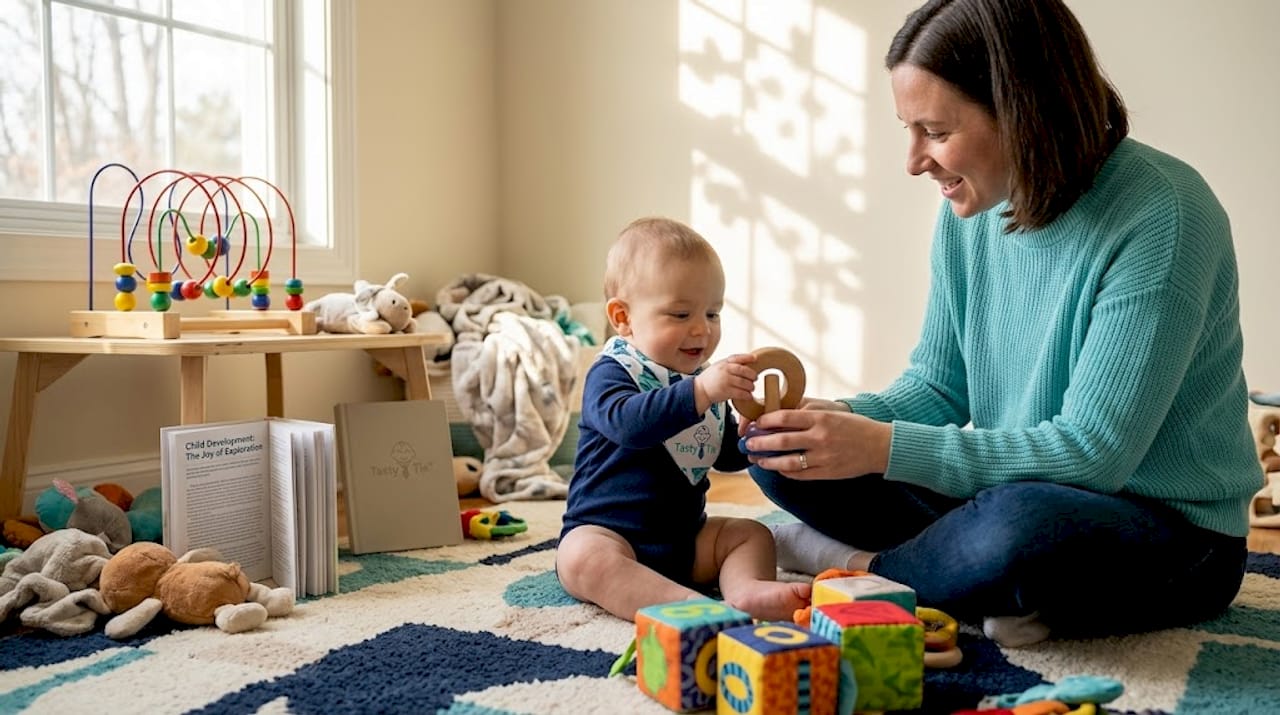
This is where playthings for infant hand coordination really come into their own. Babies at this stage are transferring objects hand to hand, developing a pincer grip, and beginning to stack and sort. Montessori-inspired grasping toys, stacking rings, and texture balls support fine motor skill development and make fashionable, thoughtful gift options.
- Stacking rings. Simple, colorful, and sized for small hands. Each ring placed on the post requires the kind of deliberate hand movement that builds coordination.
- Textured balls. Bumpy surfaces give babies something to grip, squeeze, and roll. The unpredictable movement encourages repeated reaching.
- Simple cause-and-effect toys. A soft button that makes a gentle sound when pressed teaches hand control without the sensory overload of full electronic toys.
- Grasping cubes. Each side has a different material, button, or texture, giving babies multiple reasons to explore with both hands.
You can browse more options organized by developmental stage at the TastyTie blog and find self-soothing toys for infants that combine comfort with skill-building.
Comparing popular infant fine motor toys: pros and cons
With a clear understanding of individual toy examples, comparing them side by side helps clarify the best fit for your infant’s needs.
Wooden and textile-based Montessori toys consistently outperform plastic gadget toys for fine motor development and self-soothing because they do not overstimulate and work across multiple developmental stages.
| Toy type | Developmental benefit | Self-soothing support | Safety | Style/gifting appeal |
|---|---|---|---|---|
| Wooden stacking rings (e.g., PlanToys interlocking rings) | Grasping, bilateral coordination | Moderate | High (no chemicals) | High |
| Soft cloth sensory book | Visual tracking, tactile exploration | High (familiar, quiet) | High (machine washable) | Moderate |
| Plastic electronic rattle | Cause and effect | Low (overstimulating) | Medium (check BPA) | Low |
| Silicone teething ring | Oral motor, grip strength | High (soothes gums) | High (food-grade) | Moderate |
| Clip-on teething tie (e.g., TastyTie) | Grasping, tactile, oral motor | Very high (always accessible) | High (organic cotton, no drop risk) | Very high |
Pro Tip: If you want a toy that works as both a fine motor tool and a soothing item from day one, prioritize toys that stay within reach on their own. Babies cannot retrieve dropped toys. A toy that attaches to clothing removes that frustration entirely and keeps play sessions calm and continuous.
Tips for using and choosing toys to support infant fine motor skills and self-soothing
Applying these practical tips ensures you maximize the developmental and soothing benefits of your chosen toys.
The key insight here is that how you use toys matters as much as which toys you choose. Simple, purposeful play with easy-to-regrasp toys leads to longer, calmer engagement and supports both skill building and self-soothing. Keep these practices in mind:
- Rotate a small selection. Three to four toys at a time keeps novelty alive without flooding the senses. Swap one or two out each week.
- Choose toys that baby can re-grasp independently. Repetition is how fine motor skills solidify. Every time a baby drops and picks up a toy, they are practicing.
- Use quiet play near nap transitions. A calm, contained toy session before sleep helps babies wind down. This is also when clip-on or wearable toys shine, since babies can soothe themselves without you having to retrieve anything.
- Separate teething toys from grasping practice toys. Mixing them up is fine sometimes, but having a dedicated chew-safe toy and a separate grasping toy helps babies build different skills in focused ways.
These teether management tips and teether clip safety tips are worth bookmarking if you are thinking about wearable teething options.
Pro Tip: How to enhance fine motor skills does not require a shopping spree. A single well-chosen toy used consistently is worth more than a toybox full of things baby never reaches for.
A fresh look at infant fine motor toys: balance development with calm and style
Here is an honest perspective we do not see said often enough: most parents overbuy in the first six months, and most of those purchases sit untouched.
The instinct to give babies rich, stimulating environments is real and well-meaning. But sensory load matters deeply. Gentle, calm, supervised play does more for a baby’s ability to regulate their nervous system than a room full of busy, battery-powered toys. In my view, the best infant fine motor skill toy examples are not the flashiest ones. They are the softest, quietest, and most familiar ones.
Wood and organic textiles earn their place not just because they are safer or eco-conscious, but because they last across developmental stages. A wooden ring that a 4-month-old mouths becomes the same ring a 9-month-old stacks. That cross-stage usability is genuinely valuable, and it makes these toys better gifts too.
The other thing worth saying plainly: no toy develops your baby. Calm, responsive interaction with a caregiver is still the most powerful driver of early development. Toys support that interaction. They give your baby something to focus on while you are present with them. The best toy in the world, left in a crib alone, does a fraction of what a simple cloth book does when you read it together. Choosing the right toys is worth doing thoughtfully. Obsessing over it is not. Read more on this approach through our perspective on self-soothing toys.
Find stylish and soothing teething toys at Tasty Tie
If you are looking for practical, stylish options to complement your baby’s developmental needs, consider these Tasty Tie products.
The award-winning TastyTie teething tie clips directly to your baby’s outfit, so it never hits the floor. Made from organic cotton with a satisfying crinkle sound, it supports grasping, oral motor development, and self-soothing all at once. It is machine washable, BPA-free, and rated 4.7 stars by over 450 reviewers. For a complete gifting option, the blue bodysuit with teether bundle pairs function with style, and the premium gift box makes it a memorable and genuinely useful baby shower gift that quietly tells parents you get what actually matters.
Frequently asked questions
What age are fine motor skill toys appropriate for infants?
Fine motor skill toys are appropriate starting around 2 to 3 months, growing in complexity as the baby develops through 12 months and beyond. The AAP identifies early fine motor exploration beginning around 2 months with visual tracking and simple grasping.
How can toys help with infant self-soothing?
Toys that offer gentle sensory feedback, stay within reach, and are quiet and simple give infants the calm, predictable input they need to self-regulate. Quiet, contained toys are specifically recommended for down-regulation and self-soothing.
Are electronic toys good for developing fine motor skills?
Electronic toys tend to overstimulate infants and are generally not well-suited for early fine motor development or self-soothing. Guidance on avoiding loud or battery-powered toys points directly to overstimulation as the reason.
What are some safe materials for infant fine motor toys?
Wood, organic cotton, chemical-free rubberwood, and food-grade silicone are all safe and developmentally appropriate choices. Montessori-inspired toys from wood and textiles support multiple skills simultaneously without chemical exposure risks.

