


Wearable Teether Explained for New Parents in 2026
TL;DR:
- Wearable teethers are accessories attached to a parent or baby’s outfit to provide easy, hygienic soothing during teething. They come in parent-worn necklaces and baby-worn mittens, offering constant accessibility and developmental benefits. Safe use requires verifying food-grade silicone, breakaway clasps, and adult supervision at all times.
If you’ve seen a parent wearing what looks like a chunky silicone necklace and wondered what it has to do with teething, you’re not alone. The wearable teether explained simply is this: it’s a teething accessory designed to keep soothing relief within a baby’s reach, usually worn by a parent or clipped to a baby’s outfit rather than placed loose in a crib or stroller. New parents often confuse these with decorative jewelry or, more dangerously, assume babies should wear them. This guide clears that up and gives you everything you need to make smart, safe choices for your little one.
Table of Contents
- What is a wearable teether, exactly?
- Benefits of wearable teethers for babies and caregivers
- Essential wearable teether safety tips for 2026
- How to use wearable teethers effectively
- My honest take on wearable teethers
- Meet TastyTie: a wearable teether built for real life
- FAQ
What is a wearable teether, exactly?
A wearable teether is any teething accessory that stays attached to a person or garment rather than sitting loose on a surface. That distinction matters more than it sounds. Traditional teethers get dropped constantly, roll under strollers, and end up on dirty floors. Wearable options solve that problem by staying put.
There are two main types worth knowing:
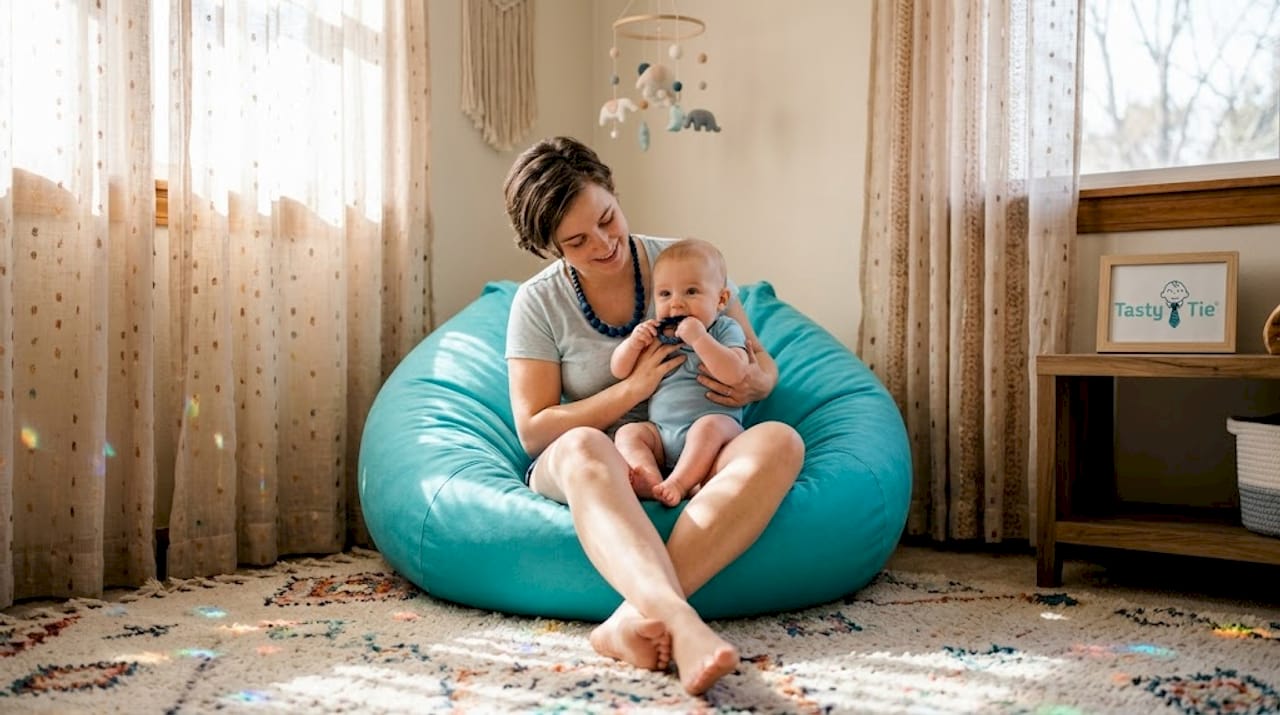
- Parent-worn necklaces: Silicone bead necklaces worn around a caregiver’s neck, designed so a baby can grab and chew the beads during feeding or lap time. They look like regular jewelry, but the beads are food-grade silicone that won’t degrade or leach chemicals when exposed to baby drool.
- Baby-worn mittens: Silicone-covered fabric mittens that slip over an infant’s hands, letting younger babies who can’t grip toys yet chew on a textured surface that’s always right there.
The core difference between wearable teethers and traditional standalone teethers comes down to accessibility. A standalone teether requires a baby to hold it, which most infants under four months can’t reliably do. A wearable teether removes that barrier entirely. It’s always within reach, always at the right height, and always clean because it hasn’t been on the floor.
Some wearable teethers, like the TastyTie teething tie, take a third approach: they clip directly to a baby boy’s outfit, combining the look of a classic necktie with a chewable, crinkle-sound toy that babies can grab, gnaw, and play with independently.
Benefits of wearable teethers for babies and caregivers
The practical advantages here go well beyond “baby stops crying.” Wearable teethers support real developmental milestones and make daily caregiving noticeably easier.
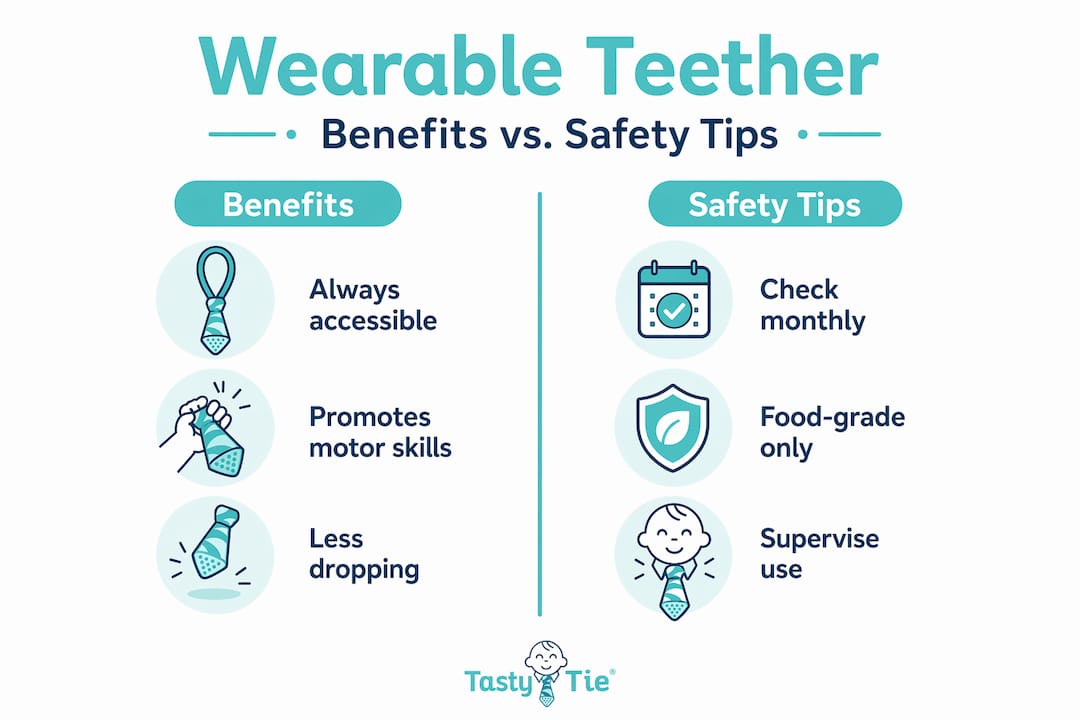
- Gum pain relief: Textured silicone surfaces provide counter-pressure on sore gums, which is the same principle a teething ring uses but delivered in a hands-free format.
- Motor skill development: Reaching for and grasping a necklace bead or mitten texture builds hand-eye coordination and fine motor skills. Babies are essentially doing occupational therapy without knowing it.
- Skin protection: Teething mittens reduce hand chewing, skin scratching, and excessive drooling on bare skin, which can cause rashes around the fist and wrist.
- Feeding time sanity: Parent-worn necklaces act as a redirection tool during feeding, giving babies something to grab and chew instead of pulling hair or scratching faces. One writer described them as a “shiny loading screen” for babies, and honestly that’s accurate.
- Self-soothing support: When a teether is always accessible, babies learn to reach for it independently. That early self-soothing behavior reduces the need for constant caregiver intervention and builds healthy independence.
Pro Tip: If your baby is between 3 and 6 months and can’t yet hold a toy reliably, start with a mitten-style wearable teether. Transition to a clip-on or necklace-style option once they’re actively reaching and grabbing.
Essential wearable teether safety tips for 2026
Safety is where most of the confusion and real risk lives. Follow these guidelines without compromise.
- Never let a baby wear a teething necklace. Baby-worn teething necklaces pose serious strangulation and choking risks. Necklaces belong on caregivers only, never on infants.
- Verify materials before buying. All wearable teething accessories must be made of 100% food-grade silicone, free from BPA, phthalates, and heavy metals.
- Require a breakaway clasp. Any teething necklace should have a breakaway clasp that pops open automatically under tension. This is a non-negotiable safety feature, not a nice-to-have.
- Check bead knotting on necklaces. Quality necklaces have individual knots between each bead so that if the cord breaks, only one bead can fall rather than the entire strand.
- Avoid amber necklaces entirely. There is no scientific evidence that amber beads relieve teething pain, and the safety risks are significant. Experts consistently recommend parent-worn silicone necklaces as the only safe wearable teething option in that category.
- Supervise always. Even safe, well-made wearable teethers require adult supervision. Never leave a baby unattended with any teething accessory.
“A breakaway clasp is usually a plastic friction-fit joint designed to pop open automatically when excessive tension is applied.” — KIANAO Wearable Teething Accessories Guide
Pro Tip: Check your wearable teether’s clasp and cord integrity monthly. Materials wear over time, and a clasp that functioned perfectly at purchase may weaken with repeated washing and daily use.
How to use wearable teethers effectively
Using wearable teethers well means matching the right type to the right situation. Here’s how to build a practical approach:
- During feeding: Wear your silicone necklace while breastfeeding or bottle feeding. Babies naturally reach for what’s in front of them, and having a chewable necklace to grab keeps their hands productively occupied.
- For young infants: Use mitten-style wearable teethers for babies under four months who haven’t developed the grip strength to hold traditional toys. Teething mittens prevent toy drops while keeping soothing textures constantly accessible.
- During floor time and stroller rides: Supplement with standalone, highly textured silicone teethers. Wearable teethers work best during feeding; standalone options suit active play better.
- For cooling relief: Refrigerate silicone teethers for 15 to 20 minutes before use. Cold reduces gum inflammation safely. Never freeze them solid, as extreme cold can damage gum tissue.
- Offer variety: Rotate textures and shapes regularly. Different gum areas respond to different surfaces, and novelty keeps babies engaged longer.
Here’s a quick comparison to help you decide which type fits your situation best:
| Situation | Best option | Why it works |
|---|---|---|
| Breastfeeding or bottle feeding | Parent-worn silicone necklace | Keeps hands busy, reduces hair pulling |
| Newborn to 4 months | Teething mitten | No grip needed, always accessible |
| Floor time or stroller | Standalone silicone teether | Full sensory engagement, easy to clean |
| On the go, dressed up | Clip-on teething tie (e.g., TastyTie) | Clips to outfit, won’t drop, absorbs drool |
For more on keeping teethers accessible without the drop problem, the why teethers fall guide breaks down practical solutions worth reading.
My honest take on wearable teethers
I’ll be straight with you. When I first encountered wearable teethers, I spent too long thinking about them the wrong way. The category name is slightly misleading. The instinct to put something called a “wearable teether” on the baby is understandable, but it’s exactly wrong and genuinely dangerous. That distinction is the single most important thing this category needs more parents to understand.
What actually changed things for me was watching how differently feeding time went when a parent used a silicone necklace correctly. The baby stopped grabbing at clothing and hair within about a minute. That’s not magic. That’s smart design meeting a real, daily frustration.
My advice: don’t overthink the product selection, but do take the safety checklist seriously. Food-grade silicone, breakaway clasp, individual bead knots. Those three things are your minimum standard. Everything else, texture, color, style, is preference. And as your baby grows, their teething needs shift. What worked at four months won’t be enough at eight. Stay flexible, stay observant, and trust that your baby will tell you what they need.
— Tasty
Meet TastyTie: a wearable teether built for real life
If you’re looking for a wearable teether that genuinely does something different, the TastyTie teething tie is worth your attention. It’s a patented, award-winning clip-on teething toy designed specifically for baby boys between 3 and 12 months. It clips directly to any outfit, so it never hits the floor. It absorbs drool, crinkles to entertain, and is made with organic cotton. It’s machine washable, BPA-free, and consistently rated 4.7 stars across more than 450 Amazon reviews.
For gifting, the blue bodysuit and teether bundle pairs style with practicality in a way that parents genuinely appreciate. It’s the kind of baby gift that quietly shows you thought about what actually helps.
FAQ
What is a wearable teether?
A wearable teether is a teething accessory that stays attached to a parent, caregiver, or baby’s outfit rather than being held loose. Common types include silicone bead necklaces worn by parents and mitten-style teethers worn on a baby’s hands.
Are wearable teethers safe for babies?
Yes, when used correctly. Parent-worn silicone necklaces with breakaway clasps and individually knotted beads are safe. Babies should never wear teething necklaces themselves due to strangulation and choking risks.
Are wearable teethers effective for teething pain?
Yes. Textured, food-grade silicone surfaces provide counter-pressure on sore gums, which relieves teething discomfort. Cooling a silicone teether in the refrigerator for 15 to 20 minutes adds additional gum-numbing relief.
When should I use a wearable teether versus a traditional teether?
Use a wearable teether during feeding or for young infants who can’t grip toys yet. Switch to standalone textured teethers during floor time or stroller rides when babies are more active and engaged.
What materials should a wearable teether be made from?
Look for 100% food-grade silicone that is free from BPA, phthalates, and heavy metals. Food-grade silicone does not degrade or leach chemicals when exposed to acidic baby drool, making it the safest material available for teething accessories.

