


Teething Toy Hygiene Best Practices for New Parents
TL;DR:
- Parents should clean teething toys daily using soap and water, especially after outings or shared use, to prevent bacterial buildup. Material-specific care is essential, with silicone and plastic tolerating washing or boiling, while wood and fabric require gentler cleaning methods; disinfect only when necessary. Regular inspection and timely replacement of damaged toys are vital to maintaining safety and hygiene for infants.
Teething toy hygiene best practices are defined as the consistent, material-specific routines parents use to remove saliva, bacteria, and residue from teethers to protect infant health. A baby’s immune system is still developing between 3 and 12 months, which makes every item that enters their mouth a real health consideration. The good news is that soap, friction, and rinsing do most of the heavy lifting. You do not need a cabinet full of disinfectants. You need a simple, repeatable routine matched to the materials you are working with.
1. Clean teething toys daily, and more after public outings
Daily cleaning is recommended for any teether that gets frequent mouthing, with increased frequency after playdates, daycare visits, or public outings. This is not overcautious advice. Saliva accumulates quickly, and warm, moist surfaces are exactly where bacteria thrive. Treating daily cleaning as a non-negotiable part of your routine, like washing bottles, removes the guesswork entirely.
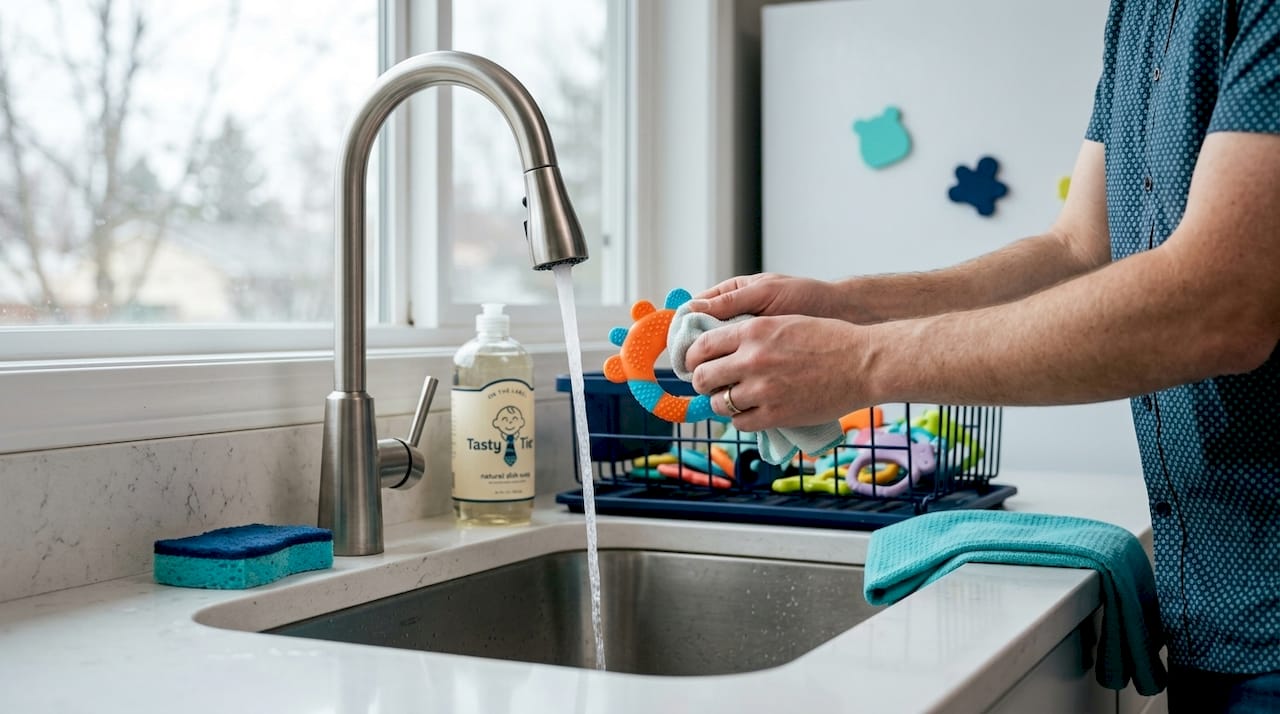
The practical trigger is simple: if your baby chewed it today, wash it today. If it hit a public surface or was shared with another child, wash it before the next use.
2. How to clean teething toys with soap and water
The most effective teething toy care guide starts with your hands. Wash your hands with soap and warm water before handling any toy you are about to clean. This prevents transferring new bacteria onto a surface you are trying to sanitize.
Follow these steps for a reliable daily cleaning routine:
- Rinse the toy under warm running water to remove loose saliva and debris.
- Apply a small amount of mild, fragrance-free dish soap to a soft cloth or baby-safe brush.
- Scrub all surfaces, paying extra attention to textured grooves, ridges, and any crevices where residue collects.
- Rinse thoroughly under clean running water until no soap film remains. Soap residue left on a teether can irritate a baby’s mouth.
- Air-dry completely on a clean drying rack before storing or returning to use.
Pro Tip: Rotate two or three clean teethers so one is always dry and ready. A damp teether stored in a bag or drawer becomes a moisture trap that encourages mold growth.
3. Material-specific care: what works and what causes damage
Not all teething toys clean the same way. Toy material compatibility with your cleaning method is critical. Using the wrong approach can damage the toy’s surface, creating micro-cracks that harbor bacteria and make future cleaning less effective.
Here is a quick breakdown by material:
- Food-grade silicone and hard BPA-free plastic: These are the easiest to clean. Most are dishwasher safe or tolerate boiling water when the manufacturer confirms it. Always check the label first.
- Untreated or natural wood: Never soak wooden teethers. Soaking causes swelling, cracking, and mold inside the grain. Wipe with a diluted white vinegar solution (one part vinegar, one part water) and let air-dry fully.
- Fabric and organic cotton toys: Machine wash on a gentle cycle with fragrance-free detergent, or spot-clean with mild soap and water. Dry thoroughly before use. Damp fabric is a breeding ground for mildew.
- Rubber teethers: Wash by hand with mild soap. Avoid boiling, which can degrade natural rubber over time and alter the texture.
Pro Tip: When choosing new teethers, prioritize materials that are easy to clean from the start. Food-grade silicone and organic cotton, like the material used in the Tastytie teething tie, are both parent-friendly and baby-safe choices.
| Material | Recommended method | Avoid |
|---|---|---|
| Food-grade silicone | Dishwasher, boiling (if approved) | Harsh chemical soaks |
| Hard BPA-free plastic | Dishwasher or soap and water | Boiling (unless confirmed safe) |
| Untreated wood | Vinegar wipe, air-dry | Soaking, dishwasher |
| Organic cotton/fabric | Machine wash, gentle cycle | High heat dryer |
| Natural rubber | Hand wash, mild soap | Boiling, bleach |
4. When and how to disinfect teething toys safely
Cleaning and disinfecting are not the same thing. Cleaning removes visible dirt, saliva, and residue. Disinfecting kills pathogens that cleaning alone may leave behind. Disinfection is situational, done after illness, heavy contamination, or shared use, not as a daily routine for every toy.
Situations that call for disinfection:
- Your baby has been sick with a cold, stomach bug, or infection.
- The toy was used by another child.
- The toy fell on a floor outside your home, in a store, or at a playground.
- The toy has been in contact with raw food surfaces.
Safe disinfecting methods depend on the material. For nonporous toys like silicone or hard plastic, a diluted bleach solution (one teaspoon of unscented bleach per gallon of water) works well. Submerge briefly, then rinse thoroughly and air-dry completely. For fabric toys, a hot machine wash cycle is the equivalent.
Pro Tip: Always clean before you disinfect. Disinfectants work best on clean surfaces. Saliva and residue can block the disinfectant from reaching the toy’s surface effectively.
Overuse of disinfectants is unnecessary and can leave chemical residues that irritate a baby’s mouth. Stick to soap and water for daily use, and reserve disinfection for the higher-risk moments listed above.
5. How to inspect teething toys and know when to replace them
Regular inspection is a non-negotiable part of any teething toy hygiene routine. Cracked, torn, or discolored toys should be replaced immediately. Damaged surfaces trap residue in ways that no amount of cleaning can fully address, and cracks can also become choking hazards. A recall of Tiyol Pull String Teething Toys due to choking hazards, affecting 102,000 units after 11 incidents, is a reminder that physical safety and hygiene go hand in hand.
Follow this inspection checklist regularly:
- Check for cracks or splits in silicone, rubber, or plastic surfaces.
- Look for discoloration that does not wash off. Yellowing or dark spots can indicate mold or material breakdown.
- Squeeze rubber and silicone toys to check for trapped water inside. If liquid comes out, the seal is compromised and the toy should be discarded.
- Inspect fabric toys for fraying, loose threads, or persistent staining that survives washing.
- Smell the toy. A sour or musty odor after washing signals bacterial or mold buildup that cleaning cannot reverse.
Pro Tip: Store clean, dry teethers in a dedicated container, separate from other toys. A small mesh bag or a clean zip-top container works well for on-the-go storage, keeping teethers away from contaminated surfaces in your diaper bag.
A practical hygiene workflow treats heavily mouthed teethers as rotation items, with each one fully cleaned, dried, and stored separately before the next use. This prevents moisture buildup and keeps your supply consistently ready.
What I have learned about keeping teething hygiene manageable
Parents often feel pressure to disinfect everything, every day. In my experience, that approach leads to burnout and, ironically, less consistent hygiene overall. The parents who do this well are not the ones with the most elaborate routines. They are the ones who have made soap-and-water cleaning automatic, like rinsing a dish.
The real shift happens when you match your cleaning method to the material and stop treating every toy the same way. A silicone teether and a wooden ring need completely different care. Getting that right once means you stop second-guessing yourself every time. Reserve disinfection for the moments that genuinely call for it, such as illness or shared use, and you will cover 95% of real-world risk without overcomplicating your day.
One more thing: replace worn toys without guilt. A cracked teether is not a cleaning problem. It is a replacement problem. Knowing the difference saves time and keeps your baby safer. And if you want to reduce floor-drop contamination entirely, wearable teethers solve a hygiene problem that washing alone never will.
— Tasty
The teething toy that makes hygiene easier from the start
If you want a teether that simplifies your cleaning routine, Tastytie was designed with exactly that in mind. The Tastytie teething tie is made from organic cotton, is fully machine washable, and clips directly to your baby’s outfit so it never hits the floor. No dropped teethers on public floors means fewer contamination events to manage. Over 35,000 parents have chosen Tastytie for its combination of safety, style, and practical design. It is rated 4.7 stars across more than 450 Amazon reviews. Toss it in the wash with your regular laundry and it is clean and ready to go. Simple hygiene starts with the right toy.
FAQ
How often should I clean teething toys?
Clean teething toys daily if your baby uses them frequently, and always after public outings, playdates, or contact with other children. Increased exposure means increased cleaning frequency.
Is soap and water enough to clean a teething toy?
Yes, for routine daily cleaning, mild soap and warm water remove the vast majority of bacteria and residue. Reserve disinfection for after illness, shared use, or heavy contamination.
Can I boil all teething toys to sanitize them?
No. Boiling is safe for food-grade silicone and some hard plastics when the manufacturer approves it, but it damages natural rubber and wood. Always check the manufacturer’s instructions before applying heat.
When should I throw away a teething toy?
Replace any teether that shows cracks, persistent discoloration, a sour smell after washing, or trapped liquid inside. Damaged surfaces cannot be fully cleaned and may pose a choking risk.
What is the safest material for a teething toy?
Food-grade silicone and organic cotton are among the safest and easiest to clean. Both are widely recommended for infant use and tolerate regular washing without degrading quickly.

