


What to Expect with Infant Teething: A Parent's Guide
TL;DR:
- Infant teething begins around 4 to 7 months and unfolds over approximately two and a half years, with symptoms lasting just a few days per tooth. Parents should distinguish normal teething signs from illness, noting that high fever, diarrhea, or vomiting warrant medical attention. Safe remedies include chilled teething toys, gentle gum massage, and maintaining consistent routines to help soothe their babies.
Knowing what to expect with infant teething can save you a lot of unnecessary worry. Most parents are caught off guard when their baby starts drooling heavily, chewing everything in sight, or waking up fussier than usual around 4 to 6 months old. The confusion is real: Is this teething? Is my baby sick? Do I need to call the doctor? This guide cuts through the noise. You will learn the real teething timeline, how to tell normal symptoms from signs of illness, and exactly what helps with teething pain without putting your baby at risk.
Table of Contents
- What to expect during infant teething stages
- Teething symptoms vs. signs of illness
- How to soothe a teething baby safely
- How teething connects to other developmental changes
- My honest take on managing teething with confidence
- A teething tool that works as hard as you do
- FAQ
What to expect during infant teething stages
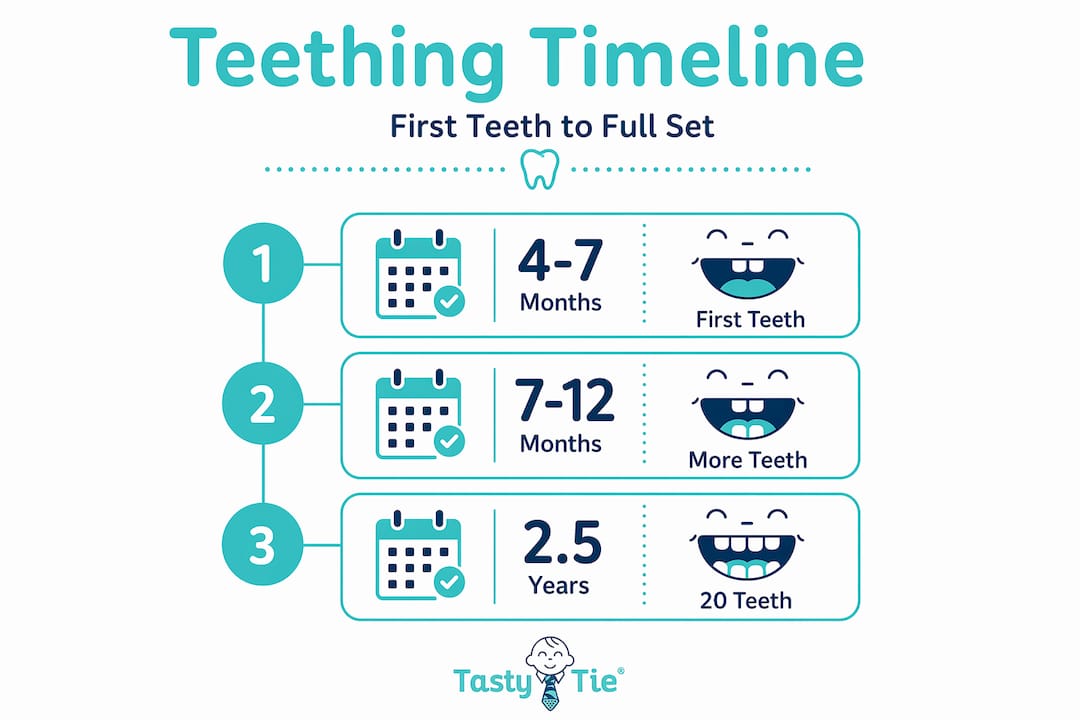
Teething does not happen all at once. It unfolds over roughly two and a half years, and the early months are where most of the drama happens.
Most infants begin teething between 4 and 7 months, with the lower front teeth (central incisors) usually appearing first. The upper front teeth typically follow within a month or two. After that, the lateral incisors, first molars, canines, and second molars come in gradually, with all 20 primary teeth in place by around age 3.

One useful way to think about the pace: the 7-4 rule. The idea is that a baby has roughly 4 teeth by 7 months, then gains about 4 more teeth every 4 months after that. It is a rough estimate, not a hard rule, but it gives parents a realistic picture of the eruption pace rather than expecting a full mouth of teeth to appear all at once.
Active teething symptoms per tooth tend to last just 3 to 5 days, starting a few days before the tooth breaks through and tapering off shortly after eruption. That means a week of mild fussiness and drooling, then a calm stretch before the next tooth works its way up.
Infant teething eruption timeline
| Teeth | Usual Eruption Age |
|---|---|
| Lower central incisors | 6 to 10 months |
| Upper central incisors | 8 to 12 months |
| Upper lateral incisors | 9 to 13 months |
| Lower lateral incisors | 10 to 16 months |
| First molars | 13 to 19 months |
| Canines (cuspids) | 16 to 23 months |
| Second molars | 23 to 33 months |
If your baby has no teeth by 18 months, that warrants a conversation with your pediatrician or dentist. Most of the time it is just genetic variation, but it is worth checking. The first dental visit should happen by the first birthday or within 6 months of the first tooth, whichever comes first.
Teething symptoms vs. signs of illness
This is where parents most often get tripped up, and honestly, it makes sense. Teething symptoms overlap with so many common baby illnesses that the lines blur fast.
Here are the actual signs of teething in infants you can expect:
- Increased drooling (often more than you think is possible)
- Swollen, tender, or slightly red gum tissue
- Mild irritability and fussiness
- Chewing on hands, toys, or anything nearby
- Slight temperature elevation under 100.4°F
- Rubbing cheeks or ears due to referred gum pain
What teething does not cause is just as important to understand. Teething does not cause high fevers at or above 100.4°F, diarrhea, vomiting, or persistent coughing. If your baby has any of those symptoms alongside what looks like teething, treat it as a possible illness and contact your pediatrician. These symptoms showing up around the same time as teething is usually coincidental, not caused by the teeth themselves.
| Symptom | Likely Teething | See a Doctor |
|---|---|---|
| Drooling | Yes | If causing rash that won’t clear |
| Low-grade temp under 100.4°F | Possible | If it rises above 100.4°F |
| Mild fussiness | Yes | If inconsolable or lasting days |
| Ear tugging | Sometimes | If paired with fever or pulling hard |
| Diarrhea | No | Always |
| Vomiting | No | Always |
| Runny nose | No | If thick or prolonged |
| Widespread rash | No | Always |
One specific thing worth knowing: ear tugging can be a teething sign because gum pain radiates toward the ear. But if your baby is persistently pulling at one ear and has a fever, that pattern points to an ear infection, not teething. The combination matters.
Teething discomfort is usually mild and should not severely disrupt your baby’s mood or sleep. If your infant seems truly miserable for more than a couple of days, that level of distress is worth evaluating beyond teething.
Pro Tip: Keep a simple symptom log on your phone. Note the date, symptom, severity, and duration. This makes it much easier to spot patterns and gives your pediatrician genuinely useful information at appointments.
How to soothe a teething baby safely
There is no shortage of teething remedies for babies on the market, but not all of them are safe. Here is what actually works and what to avoid.
What helps with teething pain:
- A clean, cold (not frozen) washcloth for baby to chew on. The gentle pressure and cool temperature ease gum soreness.
- Chilled firm rubber or silicone teethers. Refrigerate them, do not freeze. Frozen teethers are too hard and can bruise tender gum tissue.
- Gentle gum massage using a clean finger or damp gauze cloth. Light circular pressure on the gum directly over the erupting tooth can bring real relief.
- Consistent bedtime routines. When teething disrupts sleep, keeping the rest of the evening predictable helps babies settle back down faster.
Safe teething toys should be made from food-grade silicone, natural rubber, or finished hardwood, and verified BPA-free and phthalate-free. Those certifications are not just marketing language. They tell you the product has been tested for the chemicals most likely to leach into your baby’s mouth during heavy chewing.
What to avoid:
- Benzocaine gels (sold as topical numbing agents for babies). The FDA has warned against these in children under 2 due to a rare but serious condition called methemoglobinemia.
- Amber teething necklaces. These pose a real strangulation and choking hazard with no clinical evidence of effectiveness.
- Homeopathic teething tablets. The FDA has flagged inconsistent belladonna levels in some products, creating unpredictable risks.
- Liquid-filled teethers. These can crack or leak and are harder to sanitize properly.
Managing drool rash is also part of the teething care routine that does not get enough attention. Excess saliva pools around the chin, neck, and chest, causing red, irritated skin. Gently pat the area dry with a soft cloth throughout the day and apply a fragrance-free barrier cream or petroleum jelly to protect the skin. Avoid rubbing since it worsens irritation.
Pro Tip: Clip a teether directly to your baby’s outfit so it stays within reach without hitting the floor. This is especially useful during outings when you cannot always stop to wash a dropped toy.
How teething connects to other developmental changes
Teething does not happen in isolation. It overlaps with several other developmental shifts happening at the same time, which is part of why the 4 to 7 month window feels so chaotic for many families.
One key overlap: teething coincides with the natural decline of maternal antibodies between 4 and 6 months. As that transferred immunity fades, babies become more susceptible to mild colds and viruses. So when your baby seems sick during teething, they may actually be mildly sick. The timing is not a coincidence. It is just developmental biology.
Sleep changes are another area where parents often blame teething when the real driver is a growth spurt. Growth spurts at 4, 6, and 9 months can disrupt sleep independently of teething pain. If your baby’s sleep changes but they seem comfortable during the day, a growth spurt is often the more likely explanation.
Here are a few more behavioral observations that are completely normal during this phase:
- Head shaking side to side (a self-soothing response to gum pressure)
- Increased mouthing of hands, toys, and fabrics
- Mild clinginess or wanting to nurse more frequently
- Brief episodes of crying that resolve quickly with distraction or holding
The range of infant responses is genuinely wide. Some babies sail through teething with minimal fussiness. Others have several rough days per tooth. Neither experience is abnormal. What matters is whether symptoms are mild and temporary versus severe and persistent.
My honest take on managing teething with confidence
I have seen a lot of parents come through teething convinced something is seriously wrong because their baby is drooling and fussy. And I get it. When your infant is uncomfortable and you cannot fix it immediately, your brain goes to worst-case scenarios.
Here is what I have learned: teething is genuinely one of the more predictable phases of infant development. The symptoms follow a pattern. They resolve. And the things that actually soothe babies are simple, low-tech, and safe. You do not need a drawer full of expensive gadgets.
What I think matters more than any product is the willingness to pay attention. Parents who track symptoms for a few days before calling the pediatrician almost always arrive at the appointment with better information. And that leads to better care.
I also think we undervalue products that let babies self-soothe. The ability to chew on something within reach, without needing a parent to hand it over repeatedly, builds a small but real sense of independence in infants. That is worth looking for in whatever teething solution you choose.
When in doubt, call your pediatrician. Teething is not a reason to white-knuckle it alone.
— Tasty
A teething tool that works as hard as you do
Once you know what to expect from the what to expect baby teething stage, the next step is having the right tool on hand. That is where TastyTie comes in. The TastyTie teething tie is a patented, award-winning clip-on teether made from organic cotton, designed specifically for baby boys aged 3 to 12 months.
What makes it different from a standard teether is the design. It clips directly to your baby’s outfit, so it stays accessible and never hits the floor. The organic cotton absorbs drool, a crinkle sound entertains independently, and it is fully machine washable. Babies can chew, grab, and self-soothe without needing you to constantly retrieve a dropped toy.
With over 35,000 units sold and a 4.7-star rating from more than 450 Amazon reviews, parents trust it for everyday use and gifting. Explore the full TastyTie collection and find the right option for your little one.
FAQ
When do babies typically start teething?
Most infants begin teething between 4 and 7 months, with the lower front teeth appearing first. Some babies start as early as 3 months or as late as 12 months, both of which are within the normal range.
Can teething cause a fever?
Teething does not cause true fevers at or above 100.4°F. A temperature at or above that level indicates illness and warrants a call to your pediatrician, regardless of whether your baby is also teething.
What are the safest ways to soothe teething pain?
A chilled (not frozen) teether, gentle gum massage with a clean finger, and a cold damp washcloth are the most reliably safe options. Safe teething toys should be BPA-free and made from food-grade silicone, natural rubber, or organic cotton.
How long do teething symptoms last per tooth?
Active teething symptoms last approximately 3 to 5 days per tooth, beginning a few days before eruption and easing shortly after the tooth breaks through the gum.
When should I take my baby to the dentist for teething?
The first dental visit should happen by your baby’s first birthday or within 6 months of the first tooth appearing. Early visits allow the dentist to monitor eruption patterns and offer personalized teething guidance.

