


Why Wearable Teethers Upsell Easily for Retailers
TL;DR:
- Wearable teethers effectively upsell because they solve multiple parent concerns, including dropped items and on-the-go soothing.
- Bundled products tailored to specific parenting scenarios increase perceived value and make purchasing easier and more attractive.
Most people assume that selling more baby products comes down to better discounts or flashier displays. The truth is more specific than that. Wearable teethers upsell easily because they solve a problem parents feel constantly, not just occasionally. They address the chaos of teething on the go, the dropped-on-the-floor nightmare, and the baby who needs something right now while a parent has both hands full. When a product quietly solves three problems at once, adding it to a purchase feels obvious rather than pushy.
Table of Contents
- Why wearable teethers upsell easily in today’s market
- How bundles make upselling feel helpful, not pushy
- Why safety certifications close the sale
- How pediatric alignment builds premium credibility
- My take on what most retailers get wrong
- Add TastyTie to your shelf or registry today
- FAQ
Why wearable teethers upsell easily in today’s market
The baby teether category is not standing still. Multi-sensory teethers are growing at 10 to 15% annually, driven by parents who are willing to pay more when a product delivers clear functional benefits beyond basic chewing. That growth reflects a real shift in how parents shop. They are not looking for the cheapest option. They are looking for the option that makes their day easier.
Wearable teethers sit at the center of that shift. They clip to outfits, stay within baby’s reach, and often combine textures, sounds, and safe materials into a single product. That combination is exactly what the premium teether segment commands. While basic teethers sell for $3 to $4, premium silicone and organic cotton wearable options regularly retail between $18 and $35 or more.
Here is what drives that willingness to pay more:
- Hands-free convenience. A teether that clips to a onesie lets parents manage a stroller, a grocery cart, and a fussy baby at the same time.
- Multi-sensory engagement. Crinkle sounds, varied textures, and soft fabrics keep babies occupied longer, which parents immediately recognize as valuable.
- On-the-go reliability. Parents who need to teethe comfortably on the go cannot afford a product that lands on a gas station floor.
- Giftability. Wearable teethers photograph well, feel thoughtful, and look like a deliberate purchase rather than an afterthought, which makes them popular teething solutions at baby showers.
The retail implication is direct. A wearable teether does not compete with the clothing or feeding products already in a cart. It adds to them.
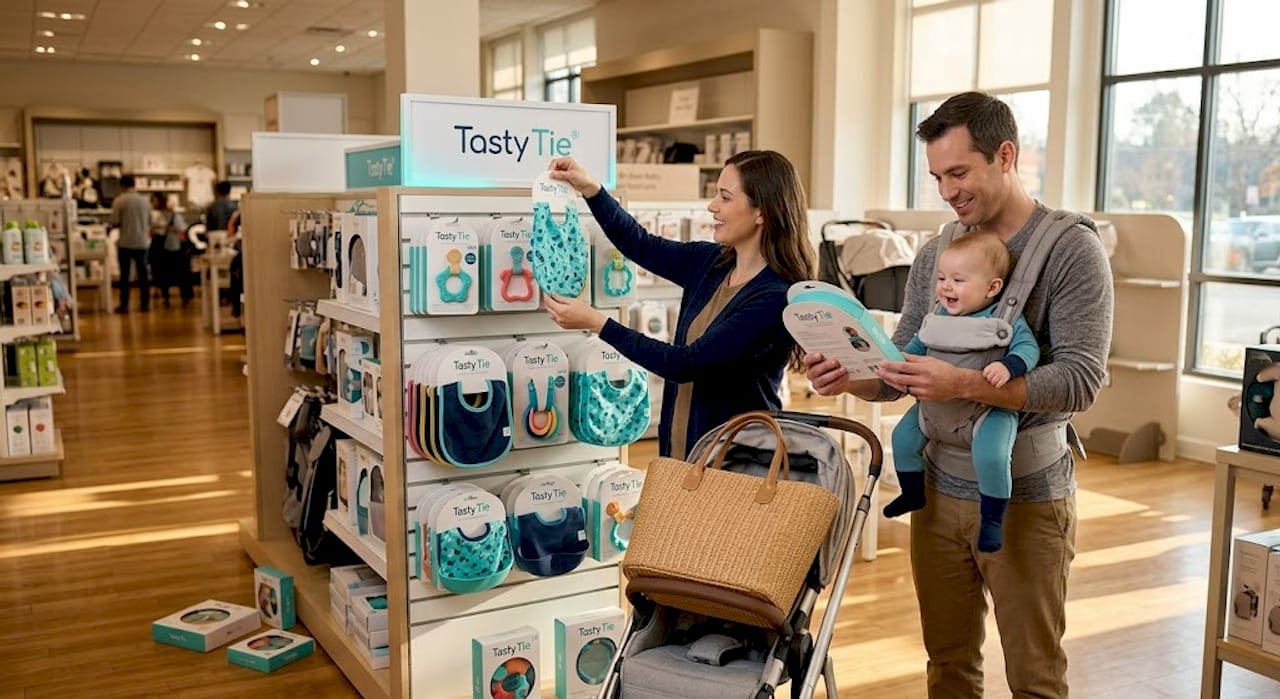
How bundles make upselling feel helpful, not pushy
The most effective retail insight in the baby products space right now is this: parents do not want more choices. They want fewer, better ones. Curated bundles aligned to real parental scenarios reduce the mental work of buying and increase average order value at the same time.
Three micro-bundle types perform especially well with wearable teethers:
- The On-The-Go Kit. A wearable clip-on teether paired with a compact wet bag and a drool bib. This bundle speaks directly to travel and errand days, and every item reinforces the others.
- The Night Routine Kit. A soft teether with a cooling option, a white noise card, and a gentle teething gel. Parents shopping for sleep solutions respond to this because it frames teething as a solvable nighttime problem.
- The Shared Play Kit. A wearable teether plus a sensory toy and a simple activity mat. This works well as a gift set and appeals to parents who want developmental value alongside teething relief.
Bundles work because they reframe the purchase from “buying a teether” to “solving a specific parenting challenge.” That shift matters. When a retailer presents a $38 bundle instead of a $14 standalone teether, the question in the parent’s mind changes from “do I need this?” to “which bundle fits my situation?”
Retailers targeting a $40 average order value can offset a typical $15 customer acquisition cost and improve profitability per transaction meaningfully. Bundles are one of the clearest paths to that target.
Pro Tip: Label bundles by situation, not by product. “New Mom Survival Kit” outperforms “Teether + Bib Set” because it speaks to an emotion rather than a category.
Why safety certifications close the sale
Safety is not just a compliance checkbox for wearable teethers. It is the deciding factor for most parents. Safety often outweighs price or design in purchase decisions, and retail buyers know it. Shelf-ready packaging that clearly displays certifications like ASTM F963, FDA compliance, or organic material verification signals trustworthiness before a word is read.
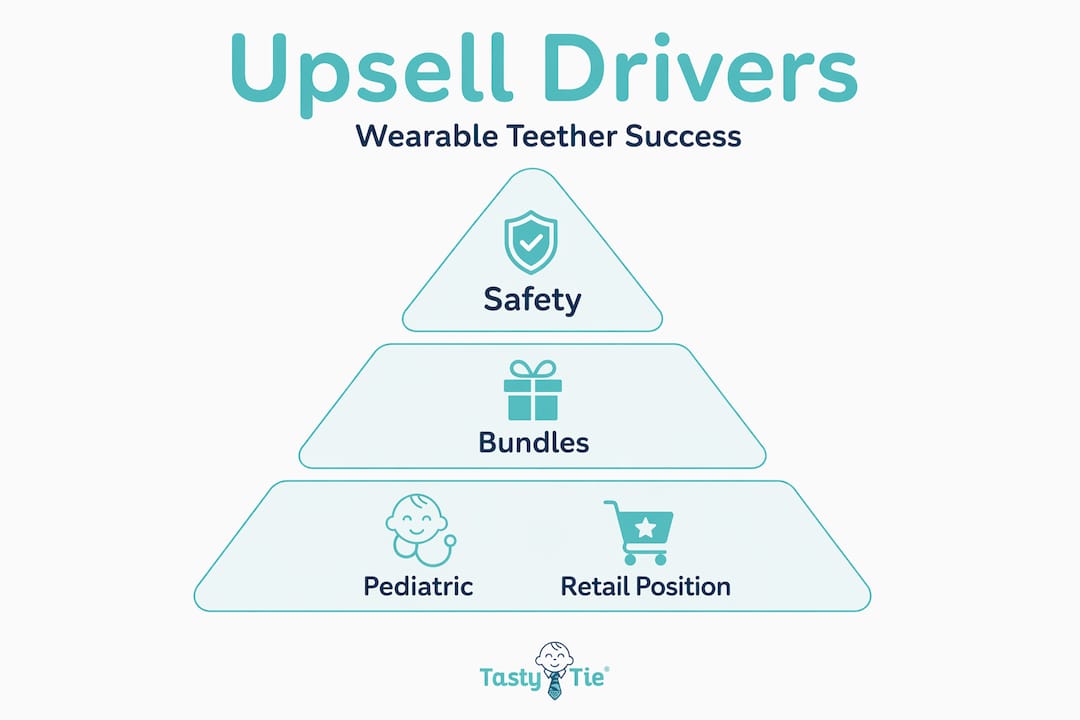
The cost of getting there is real. ASTM F963 compliance and third-party testing typically runs between $500 and $2,000 per product, which creates a natural market barrier. Products that clear that bar communicate something valuable: someone cared enough to spend money proving this is safe. Parents pick that up immediately.
Here is how safety transparency translates directly into upsell potential:
| Safety Signal | What It Communicates to Parents | Upsell Effect |
|---|---|---|
| ASTM F963 certification | Meets U.S. toy safety standards | Increases willingness to pay premium |
| Organic cotton labeling | No synthetic chemicals near baby’s mouth | Supports price premium of $8 to $15 |
| Third-party test results visible on packaging | Transparency and accountability | Reduces purchase hesitation |
| Machine washable claim | Practical safety for daily use | Increases perceived long-term value |
Clean label transparency is now a procurement preference at the retail buyer level too. Stores want products their staff can explain confidently and their customers can trust immediately. A wearable teether that checks those boxes is easier to place on shelves and easier to recommend at point of sale.
How pediatric alignment builds premium credibility
Parents are skeptical. They have been sold on “magic” teething solutions before and many of those products let them down. The ones that build lasting trust are the ones tied to professional advice rather than marketing language alone.
Parents trust teethers aligned with dental recommendations, and products that lean into that association can charge more and sell more consistently. Chilled teethers, massage-style textures, and soft materials that mimic what pediatric dentists suggest for gum pressure all carry built-in credibility. When a product’s design matches what a trusted professional might recommend, the marketing conversation changes.
“The most effective teething products aren’t marketed as toys. They’re marketed as safe, effective parts of a daily care routine, and that framing earns the trust that drives repeat purchases.”
This matters for retailers thinking about how to sell teethers on the floor. A staff member who can say “this one is designed around what pediatric dentists recommend for gum stimulation” is doing something different from reading a package back to a customer. Educational content, shelf cards, and product descriptions that reference teething relief options backed by professional guidance convert hesitant browsers into confident buyers. The product becomes part of a trusted routine rather than just another item in a crowded category.
My take on what most retailers get wrong
I’ve watched retailers treat wearable teethers like impulse buys. Display them near the register, mark them at $12, and wait. That approach undersells the product and the category.
In my experience, the real opportunity is in storytelling at the shelf level. Parents don’t know they need a wearable teether until someone explains why a teether that clips on is categorically different from one that sits in a drawer. When you frame the product around a real parenting moment, whether that’s the restaurant dinner where everything keeps dropping or the church service where silence is non-negotiable, the sale becomes a conversation, not a transaction.
What I’ve also learned is that institutional buyers are largely ignored by most wearable teether brands. Daycare centers, pediatric waiting rooms, and hospital gift shops represent consistent, bulk demand for durable and easy-to-sanitize teethers. Most brands are so focused on the baby shower gift market that they miss the B2B channel entirely.
My honest take: marketing wearable baby products well means respecting how much thought parents put into every purchase. Lead with safety, follow with convenience, and let the product’s design do the closing.
— Tasty
Add TastyTie to your shelf or registry today
If you’ve been looking for a wearable teether that checks every box, TastyTie is exactly what this article describes. The TastyTie teething tie clips directly to baby’s outfit, absorbs drool, crinkles for sensory engagement, and is made with organic cotton. It has earned over 450 five-star reviews and sold more than 35,000 units because it solves real problems in a way parents recognize instantly. Retailers consistently report that it adds to transactions rather than displacing other categories. For a ready-made upsell bundle, the Blue Bodysuit & Teether set makes gifting effortless and retail display simple.
FAQ
Why do wearable teethers upsell more easily than traditional ones?
Wearable teethers solve multiple parenting problems at once, including dropped teethers, drool management, and on-the-go soothing, which makes them feel like a natural add-on rather than a competing purchase. That practical clarity removes the hesitation that slows down traditional teether sales.
What makes a wearable teether a good retail upsell candidate?
Products that are easy to explain, visually distinctive, and safety-certified convert quickly at point of sale because parents understand the value without needing to research. Wearable teethers with organic materials and clear certifications also justify a higher price point, improving margin per transaction.
How do bundles help retailers sell more teethers?
Use-case bundles reduce the cognitive effort of buying by grouping products around a specific parenting scenario, which increases average order value and makes the upsell feel helpful rather than commercial.
Are safety certifications really that important for teether sales?
Yes. Safety frequently outweighs price or design as a purchase criterion for baby products. Displaying ASTM F963 compliance, organic material sourcing, and third-party test results on packaging builds the trust that converts browsers into buyers.
What is the best way to display wearable teethers in a retail store?
Position wearable teethers alongside clothing or diaper bag accessories rather than in a standalone toy section. The clip-on design makes the connection to outfit wear intuitive, and proximity to apparel encourages the add-on purchase that makes wearable baby products so effective as upsells.

